
Prior police-reported violence and sociodemographic characteristics of gender-related homicide victims in Canada
Highlights
- For this Juristat article, gender-related homicides of women and girls are defined as solved homicides perpetrated by a man or boy who was an intimate partner or family member of the victim, or who inflicted sexual violence on the victim as part of the homicide, or who killed a woman or girl who was identified by police as a sex worker.
- Women and girls who were killed in a gender-related homicide incident between 2009 and 2022 were older, about half were in a marital relationship and were more often employed at the time of their homicide compared with other homicide victims.
- Indigenous women and girls were overrepresented as victims. Despite comprising 5% of the total population of women and girls in 2021, one-fifth of gender-related homicide victims were Indigenous.
- From 2009 to 2022, more than one quarter (26%) of all gender-related homicide victims had at least one prior contact with police as a victim of a violent crime, though 57% of Indigenous gender-related homicide victims had at least one prior contact.
- A small proportion (19%) of gender-related homicide victims with a prior contact had five or more contacts, but were the victim in more than half of all police contacts recorded.
- Most (79%) police contacts involving victims of gender-related homicide were for physical assault offences and nearly two thirds (63%) of all prior contacts resulted in the victim sustaining physical injury.
- From 2009 to 2022, more than half (56%) of police contacts perpetrated against gender-related homicide victims were by an accused who was a current or former intimate partner.
- Among gender-related homicide victims with prior contact, half (49%) were victimized at least once by the same person later accused of their homicide. This proportion was at least six times greater than what was found for other homicide victims.
- According to linked data, among gender-related homicide victims enrolled in a postsecondary education program between 2009/2010 and 2021/2022, two-fifths (39%) were in a university program.
- Close to one in six (16%) gender-related homicide victims were immigrants or non-permanent residents. Of these victims, just over one-fifth (21%) were killed within their first five years in Canada, higher than what was the case for other homicide victims (12%).
- For gender-related homicide victims who had visited an emergency department prior to their death, about two-thirds (64%) had attended in the year prior, with an average of 3.2 admissions. These figures are lower than what was documented for other homicide victims.
- While a larger proportion of gender-related homicide victims reported employment income on their taxes compared to other homicide victims, two in five (41%) were classified as having low income, more than double what was found among families in the general population (17% in 2022).
In recent years, the term femicide—broadly understood as the killing of women and girls because of their gender—has gained considerable visibility, moving from a relatively niche term to one now widely used in discussions of gender equality and justice. Using the term femicide acknowledges that, for many women and girls who are killed, the homicide is not merely a criminal act, but one that is rooted in misogyny, patriarchy and gender imbalances. These dynamics are often further intensified by systemic inequalities such as sexism, discrimination, colonialism, racism, poverty, and a collective history of trauma that puts some women and girls at greater risk (Government of Canada, 2022; UNODC, 2025). In Canada, the term femicide is appearing with increasing frequency in discussions about legal and policy responses to address violence against women and girls—including the Protecting Victims Act (Bill C-16), which received Royal Assent in June 2026. Among other reforms, the Act treats murders of women and girls as femicides when committed in specific aggravating circumstances, including intimate partner homicides involving coercive control, as well as murders committed in the context of hate, sexual violence, human trafficking or exploitation. However, in keeping with international terminology, the term “gender-related homicide” will be used throughout this article (see Text box 1 for a definition).
Gender-related homicides are rarely isolated events. They are often the culmination of repeated acts of violence, affecting certain groups of women and girls disproportionately (Campbell et al., 2009; Office of the Chief Coroner, 2024; UNODC, 2024; UNODC, 2025; UN Women, 2015). A history of violence is one of the most common precursors in these cases and has become a central component in many risk assessment tools (Campell et al., 2009; Czarnietzki et al., 2024; Johnson et al., 2019; Koppa & Messing, 2021). Yet specific forms of gender-based violence that often precede these deaths, namely intimate partner and sexual violence, are widely underreported to police (Conroy, 2021b; Cotter, 2021b; Cotter & Burczycka, 2026). As a result, a documented history of violence may be lacking in many cases, but reported incidents could signal more severe or chronic cases of abuse, making police-reported data especially important to examine. An earlier analysis of individuals accused of gender-related homicide found that many had prior contact with both police and healthcare institutions (Sutton-Preddie, 2025). Expanding this evidence base by examining victims’ prior police contact and sociodemographic characteristics can help identify potential areas of concern, opportunities for intervention, and improve the ability to prevent future incidents.
Drawing on multiple linked datasets, this Juristat presents information on the nature and frequency of prior incidents of police-reported violence against women and girls who were later killed in a gender-related homicide as well as their sociodemographic (i.e., education, immigration, health and income) characteristics. The article is divided into three sections. The first presents basic demographic information collected in the Homicide Survey to provide a foundation on which the linkage analyses will build. The second examines the characteristics of prior police-reported violence against gender-related homicide victims by linking data from the Homicide Survey to the Uniform Crime Reporting (UCR) Survey. The third section presents data on several sociodemographic and economic factors by linking data from the Homicide Survey with post-secondary education, immigration, health and tax records.
Each section is organized by first presenting data on all victims of gender-related homicide to demonstrate broad patterns, and then, where sample size permits, data are further disaggregated by the Indigenous (First Nations people, Métis or Inuit) identity of victims. Doing so aligns with the Government of Canada’s response to Truth and Reconciliation Commission Calls to Action 39: to publish data on family violence victimization and the homicides of Indigenous people in Canada.
This article was produced with funding support from Women and Gender Equality Canada.
Start of text box 1
Text box 1
Terminology
While the term femicide has increased in use in recent years, it continues to lack a standardized definition internationally, despite its recent incorporation into Canadian criminal law.Note In 2022, the United Nations Office on Drugs and Crime, in collaboration with the United Nations Entity for Gender Equality and the Empowerment of Women, developed a statistical framework to standardize the collection of femicide data across communities, regions and countries. The framework considers all intentional killings of a woman or girl by an intimate partner or family member to be gender-related alongside killings where one of eight gender-related motivations are present, regardless of relationship type (for more information see Textbox 1 in Sutton, 2023).
The definition used in this Juristat article was modeled off the statistical framework, drawing on all relevant information collected in the Homicide Survey. Specifically, gender-related homicides of women and girls are defined as homicides perpetrated by a man or boy who was an intimate partner or family member,Note or who inflicted sexual violence on the victim as part of the homicide,Note or who killed a woman or girl who was identified by police as a sex worker.Note To be included, the homicide must have been perpetrated by a man or boy accused and be cleared (i.e., solved) by police.Note
Previous Juristat articles have shown that gender-related homicides are different from non-gender-related homicides in several notable ways (Sutton-Preddie, 2025; Sutton & Cotter, 2023; Sutton, 2023). For example, these homicides often differ in terms of victim age, location of homicide, method of killing and police-reported motives (Sutton, 2023). Persons accused of these crimes often had fewer prior contacts with police, but a greater proportion of these contacts involved perpetrating violence against the same victim who was later killed in the gender-related homicide (Sutton-Preddie, 2025). While these accused averaged fewer homicide-related charges in court, they were more often found guilty and sentenced to longer periods of incarceration (Sutton & Cotter, 2023). It may be that victim gender is the key factor behind these differences or, alternatively, that certain factors especially relevant to these homicides (e.g., being perpetrated by a man or boy who shares a close, often intimate, relationship with the victim) are better differentiators.
Accordingly, throughout this Juristat, gender-related homicides will be compared with two distinct reference groups: non-gender-related homicides of women and girls and homicides of men and boys. The former requires no evidence of the gender-related criteria mentioned above (e.g., homicides of women or girls which were related to drugs, robbery, or involving a woman or girl as the accused) but must have been cleared by police. The homicide of men and boys include all cleared homicides and are not distinguished by accused-victim relationship or other characteristics.
Of note, many non-gender-related homicides of women and girls could in fact be gender-related but cannot be classified as such based on data currently available in the Homicide Survey. While homicides of women and girls by men who share intimate or familial relationships are the most common type of femicides, other homicides of women and girls that are motivated by gender (e.g., where there is evidence of hatred, control, prior violence and exploitation) are not captured, or not captured reliably, in the Homicide Survey. This limitation is not unique to Canada but reflects broader data limitations identified in international monitoring efforts that similarly highlight the difficulty in identifying and recording gender-related homicides (UNODC, 2024; UNODC, 2025).
For readability, the terms “gender-related homicides” and “non-gender-related homicides” are often used in this article, without reference to victims’ gender, but they always refer to the homicide of women and girls.
End of text box 1
Demographic characteristics among victims of gender-related homicide
From 2009 to 2022, there were 6,534 cleared homicides that linked to the UCR Survey (see Text box 2 for detailed information about the linkage).Note Seven in ten (69%) of these homicide victims were men and boys and the remaining 31% were women and girls. Of the women and girl victims, more than two-thirds (69%) were killed in a gender-related homicide and one in five (20%) of these gender-related homicide victims were identified as Indigenous by police.Note
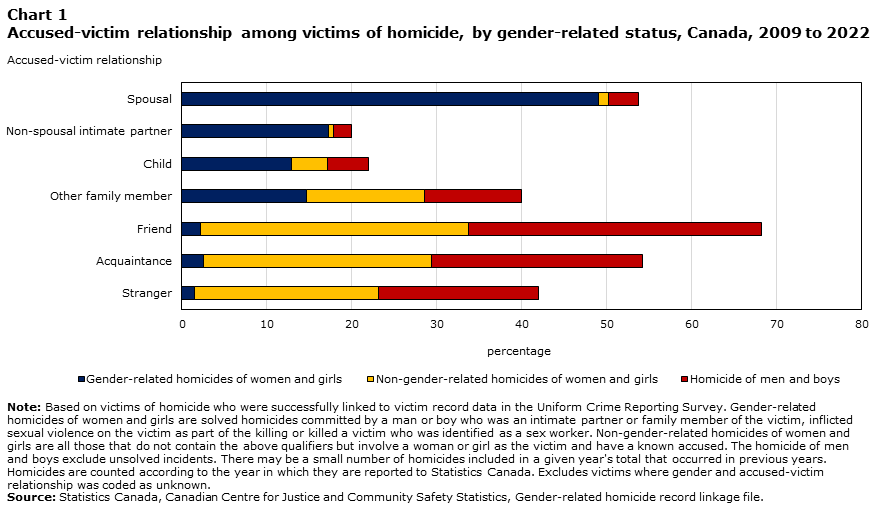
Aligned with the definition used in this article, the largest proportion of all gender-related homicide victims shared a current or former intimate relationship (i.e., spousal or non-spousal intimate partner) with their accused (66%), followed by a familial relationship (i.e., child or other family member; 28%), or another type of relationship, such as being acquaintances of (3%), friends with (2%), or strangers to the accused (2%)Note (Chart 1).
Chart 1 start
Data table for Chart 1
| Accused-victim relationship | Gender-related homicides of women and girls | Non-gender-related homicides of women and girls | Homicide of men and boys |
|---|---|---|---|
| percentage | |||
| Note: Based on victims of homicide who were successfully linked to victim record data in the Uniform Crime Reporting Survey. Gender-related homicides of women and girls are solved homicides committed by a man or boy who was an intimate partner or family member of the victim, inflicted sexual violence on the victim as part of the killing or killed a victim who was identified as a sex worker. Non-gender-related homicides of women and girls are all those that do not contain the above qualifiers but involve a woman or girl as the victim and have a known accused. The homicide of men and boys exclude unsolved incidents. There may be a small number of homicides included in a given year's total that occurred in previous years. Homicides are counted according to the year in which they are reported to Statistics Canada. Excludes victims where gender and accused-victim relationship was coded as unknown.
Source: Statistics Canada, Canadian Centre for Justice and Community Safety Statistics, Gender-related homicide record linkage file. |
|||
| Spousal | 49.0 | 1.1 | 3.6 |
| Non-spousal intimate partner | 17.2 | 0.7 | 2.1 |
| Child | 12.9 | 4.2 | 4.9 |
| Other family member | 14.6 | 14.0 | 11.4 |
| Friend | 2.2 | 31.5 | 34.4 |
| Acquaintance | 2.6 | 26.8 | 24.8 |
| Stranger | 1.5 | 21.6 | 18.8 |
Chart 1 end
This is in contrast to non-gender-related homicides and homicides of men and boys where about four in five shared a non-intimate, non-familial relationship with their accused (80% and 78%, respectively). More specifically, these victims were most often friends with (32% and 34%, respectively), acquaintances of (27% and 25%, respectively), or strangers to (22% and 19%, respectively) the accused.
When examining the subset of gender-related homicide victims who were Indigenous, the same pattern was observed at a high-level — most were killed by an intimate partner (65%) or family member (26%) – but slightly more Indigenous women and girls (9%) were killed by an accused with whom they shared a non-intimate, non-familial relationship compared with gender-related homicide victims overall (7%).
Gender-related homicide victims are older and often align with the general population in their demographic characteristics
From 2009 to 2022, there were several notable differences in the demographic characteristics of gender-related homicide victims compared with other homicide victims. Over this period, the median age of homicide victims in Canada was 35 years. However, gender-related homicide victims were older, on average, with a median age of 39 years (compared with a median of 35 years among non-gender-related homicide victims and 34 years for men and boy victims). Like patterns found in the general population (Statistics Canada, 2022a), half (50%) of all gender-related homicide victims were in a marital relationship whereas smaller proportions of non-gender-related homicide victims and men and boys were in such relationships (26% and 28%, respectively) (Table 1).
Employment is generally associated with a reduced risk of homicide, as it can provide income stability, social support and reduced exposure to high-risk environments. In the context of intimate partner homicide, employment can enhance financial independence and autonomy, allowing individuals to leave abusive relationships thus reducing lethality risk (Campbell et al., 2009; UN Women, 2015). Conversely, unemployment—and, in some cases, underemployment or precarious work—may heighten vulnerability by increasing economic disadvantage, isolation and dependence on abusive partners, thereby constraining exit options and elevating risk (CDC, 2024; Garcia-Vergara et al., 2022). Based on police-reported data, a sizable proportion of women and girls killed in a gender-related homicide were employed (44%),Note lower than the employment rate (62%) among persons aged 15 and older in the general population (Statistics Canada, 2026), but higher than what was found for non-gender-related homicide victims (28%), as well as men and boy victims (35%).
Demographic characteristics among victims of gender-related homicides differ based on Indigenous identity
Despite Indigenous women and girls comprising about 5% of the total population of women and girls in Canada in 2021 (Statistics Canada, 2022b), from 2009 to 2022, one in five (20%) of all gender-related homicide victims were Indigenous.Note Compared with gender-related victims overall, Indigenous victims of gender-related homicide were younger, with a median age of 30 years compared with 39 years for gender-related victims.Note Indigenous victims of gender-related homicide were more often single, never having been married (37% versus 24% of gender-related victims overall) or were in a common-law relationship (41% versus 23%) at the time of their homicide. A smaller proportion of Indigenous gender-related homicide victims were employed compared with gender-related homicide victims overall (19% versus 44%).
The overrepresentation of Indigenous people as victims and persons accused of crime is well documented (Burczycka et al., 2026; Department of Justice, 2024; Heidinger, 2022; Heidinger, 2021; Perreault, 2022). This overrepresentation can be traced to settler-colonial laws and policies that displaced Indigenous people from their land, separated families and communities, and attempted to suppress language, spiritual and cultural practices (MMIWG, 2019; Truth and Reconciliation Commission of Canada, 2015). The legacy of these policies continues through systemic discrimination and racism that create barriers to seeking justice, education, employment, and culturally appropriate services (Canadian Heritage, 2024; Truth and Reconciliation Commission of Canada, 2015). These challenges are compounded by geographic isolation, limited economic opportunities, and over-policing practices, which can collectively lead to cycles of poverty, substance use, and higher rates of incarceration (Canadian Heritage, 2024; Truth and Reconciliation Commission of Canada, 2015), all of which increase Indigenous Peoples’ vulnerability to all forms of violence, including homicide.
Start of text box 2
Text box 2
Linkage file: Prior police-reported violence against homicide victims
Since many gender-related homicides are the culmination of previous acts of violence (Campbell et al., 2009; Czarnietzki et al., 2024; Johnson et al., 2019; UNODC, 2025; UNODC, 2018), examining prior contacts with police as victims of violent crime can provide important insight into opportunities for prevention and intervention. However, police-reported data capture only a minority of violent victimizations. In Canada, approximately one quarter of violent incidents are reported to police, with even lower reporting rates for sexual assault and intimate partner violence (Cotter & Burczycka, 2026; Cotter, 2021a; Cotter, 2021b). As such, while police data offer insight into prior victimization, they may reflect more severe or persistent forms of violence, likely underestimating the true scope of violence experienced.
To complete this analysis, a data file was created linking the Homicide Survey to the Uniform Crime Reporting (UCR) Survey, where all cleared gender-related, non-gender-related, and homicides involving men and boys reported by police between 2009 and 2022 were selected as the cohort.Note Even though the analytical focus is on victims, only including cleared homicides protects against the possibility that non-gender-related homicides of women and girls could in fact be gender-related once the case is cleared and an accused identified. As a result, comparisons between gender-related and non-gender-related homicides of women and girls are less likely to be affected by misclassification.
A unique identifier was created for each homicide victim to link their records to the UCR Survey, facilitating the analysis of all prior police-reported incidents where they were a victim of a violent crime since 2009. Of all cleared homicides, 97% of victim records successfully linked to the UCR Survey.Note In total, there were 6,534 victims of homicide between 2009 and 2022 included in the linked data file: 1,399 gender-related homicide victims, 631 women and girls who were victims of a non-gender-related homicide and 4,504 homicide victims who were men or boys.
A police contact is defined as a reported incident where an individual was the victim of a violent criminal offence prior to the homicide occurring. These contacts are limited to homicide victims who had contact with police between January 1, 2009 and December 31, 2022. As a result, the total number of prior police contacts among homicide victims is likely underestimated, especially for those who were killed early in the reference period. Linkage data are also limited to selected violent crime incidents as the UCR Survey does not collect victim data for property crimes, other Criminal Code offences or other federal statutes.Note Considering that some property crimes are committed within the context of gender-based violence, and many violent crime incidents never come to the attention of police, the data presented in this analysis will not reflect the true scope of prior violence perpetrated against victims of gender-related homicide.
End of text box 2
Prior police-reported violence against gender-related homicide victims
While risk varies across individuals, relationships and communities, a history of violence is one of the most well documented factors associated with gender-related homicides, with research demonstrating prior police intervention in a sizable number of cases (Campbell et al., 2009; Czarnietzki et al., 2024; Dawson & Carrigan, 2021; Johnson et al., 2019; Koppa & Messing, 2021; Office of the Chief Coroner, 2024). This section therefore presents information on police-reported violence against women and girls who were later killed in a gender-related homicide incident by examining a data file linking the Homicide Survey to the UCR Survey.
Most findings reported in this section, unless otherwise noted, reflect all prior police contacts for a violent offence and are not restricted to offences perpetrated within the context of domestic or intimate partner violence or by the same person later accused in the homicide. It is, however, worth noting that there is an increased risk of revictimization among those with past experiences of violence (Cotter & Heidinger, 2026; Rogers et al., 2023). As a result, contact may occur across multiple episodes, potentially involving the same or different accused individuals.
More than one-quarter of all gender-related homicide victims had prior contact with police as a victim of violent crime
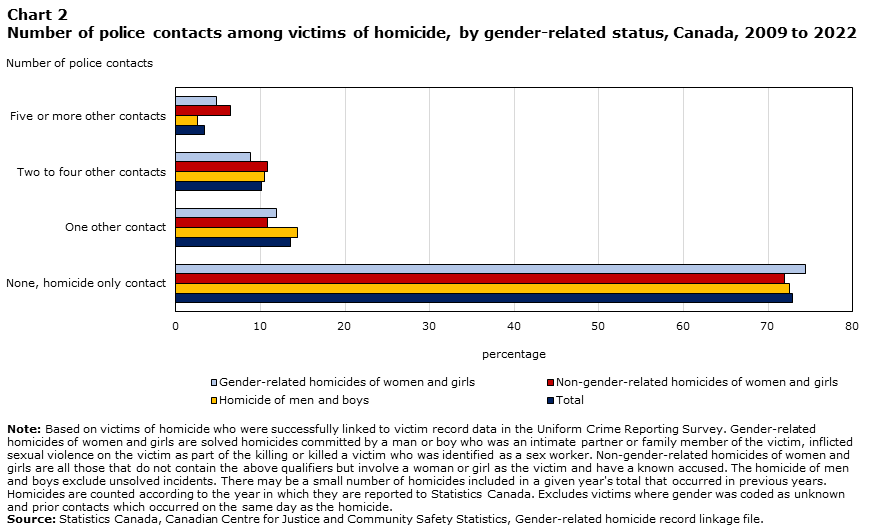
From 2009 to 2022, most (74%) victims of a gender-related homicide did not have contact with police as a victim of violent crime prior to their death (Chart 2). However, more than one quarter (26%) of these women and girls did—a proportion which was slightly lower than what was found for non-gender-related homicide victims (28%) and men and boys (27%). A greater proportion of Indigenous homicide victims, in contrast, had at least one previous contact with police as victims of violence (57% among Indigenous gender-related homicide victims, 56% for non-gender-related Indigenous victims, and 50% of Indigenous men and boys).
Chart 2 start
Data table for Chart 2
| Number of police contacts | Gender-related homicides of women and girls | Non-gender-related homicides of women and girls | Homicide of men and boys | Total |
|---|---|---|---|---|
| percentage | ||||
| Note: Based on victims of homicide who were successfully linked to victim record data in the Uniform Crime Reporting Survey. Gender-related homicides of women and girls are solved homicides committed by a man or boy who was an intimate partner or family member of the victim, inflicted sexual violence on the victim as part of the killing or killed a victim who was identified as a sex worker. Non-gender-related homicides of women and girls are all those that do not contain the above qualifiers but involve a woman or girl as the victim and have a known accused. The homicide of men and boys exclude unsolved incidents. There may be a small number of homicides included in a given year's total that occurred in previous years. Homicides are counted according to the year in which they are reported to Statistics Canada. Excludes victims where gender was coded as unknown and prior contacts which occurred on the same day as the homicide.
Source: Statistics Canada, Canadian Centre for Justice and Community Safety Statistics, Gender-related homicide record linkage file. |
||||
| None, homicide only contact | 74.5 | 71.9 | 72.5 | 72.9 |
| One other contact | 11.9 | 10.8 | 14.4 | 13.5 |
| Two to four other contacts | 8.9 | 10.8 | 10.5 | 10.2 |
| Five or more other contacts | 4.8 | 6.5 | 2.6 | 3.4 |
Chart 2 end
In all, 357 women and girls who were victims of a gender-related homicide had at least one prior contact with police as a victim of violence, totaling 1,075 contacts. Almost one in five (19%) of these women and girls had five or more contacts, accounting for more than half (53%) of all prior contacts among victims of gender-related homicide. A similar pattern was found for non-gender-related homicides: 23% of women and girls were the victim in 56% of all contacts. Fewer (9%) men and boys had five or more contacts, representing a smaller share (29%) of all contacts. Of the 357 victims of gender-related homicide with at least one prior police contact, a high proportion (43%) were Indigenous, with an average of 4.3 prior contacts. One-third (33%) of these women and girls had five or more contacts but were the victim in more than two-thirds (67%) of all contacts.
While previous police-reported violence was slightly less common among gender-related homicide victims, some women and girls were living in particularly violent situations, averaging more police contacts than what was the case with the other groups. For example, of the 357 victims of gender-related homicide with at least one prior contact, three quarters (76%) were victims of intimate partner violence at least once, higher than what was found for non-gender-related homicide victims (55%) and among men and boys (22%).
One in eight gender-related homicide victims had contact with police in the year prior to their death
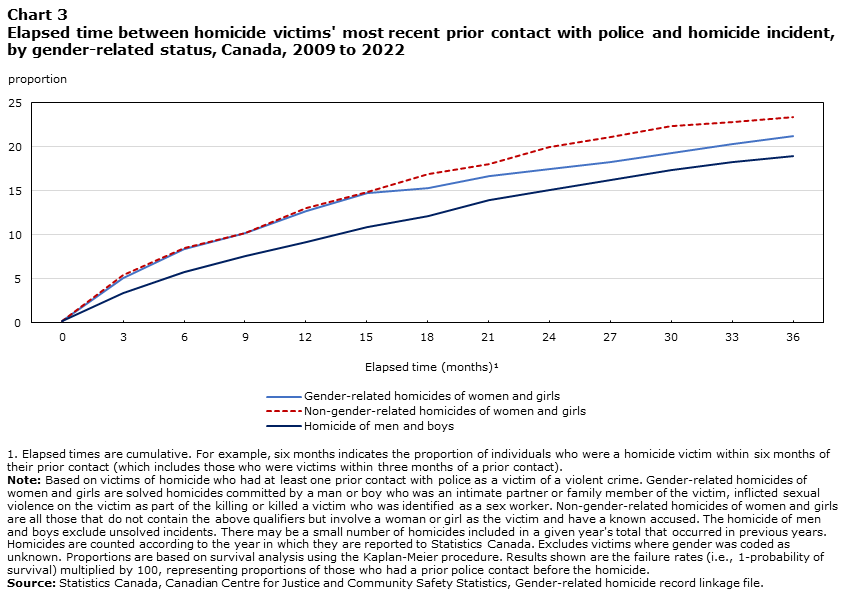
More women and girls, regardless of whether the homicide was gender-related, had contact with police in the year prior to their homicide than what was the case for men and boys (Chart 3). Namely, police became aware of the violence experienced by about one in eight (13%) women and girls within a year of their homicide compared with 9% of men and boy victims.
Chart 3 start
Data table for Chart 3
| Elapsed time (months) Data table for Chart 3 Note 1 | Gender-related homicides of women and girls | Non-gender-related homicides of women and girls | Homicide of men and boys |
|---|---|---|---|
| proportion | |||
Source: Statistics Canada, Canadian Centre for Justice and Community Safety Statistics, Gender-related homicide record linkage file. |
|||
| 0 | 0.1 | 0.2 | 0.2 |
| 3 | 5.1 | 5.4 | 3.3 |
| 6 | 8.4 | 8.5 | 5.8 |
| 9 | 10.2 | 10.2 | 7.6 |
| 12 | 12.7 | 13.0 | 9.1 |
| 15 | 14.8 | 14.9 | 10.9 |
| 18 | 15.3 | 16.9 | 12.1 |
| 21 | 16.6 | 18.0 | 13.9 |
| 24 | 17.5 | 20.0 | 15.0 |
| 27 | 18.2 | 21.1 | 16.2 |
| 30 | 19.3 | 22.4 | 17.3 |
| 33 | 20.3 | 22.8 | 18.2 |
| 36 | 21.2 | 23.4 | 19.0 |
Chart 3 end
Similar patterns were documented for Indigenous victims, but to a much larger extent. Three in ten (29%) Indigenous gender-related homicide victims had contact with police as victims of violence in the year prior to their deaths, higher than Indigenous men and boy victims (17%).
While these findings reflect all prior police-reported violence—not restricted to offences perpetrated within the context of domestic or intimate partner violence or by the same person later accused in the homicide—data show that one-fifth (21%) of all prior contacts among gender-related homicide victims occurred within three years of their homicide. Thus, the opportunity remains for meaningful risk assessment and safety planning for a sizable proportion of gender-related homicide victims.
Physical assault offences and minor injuries common in prior police contacts
Among gender-related homicide victims with a prior police contact between 2009 and 2022, a physical assault offence (79%) was the most common type of violence experienced (Table 2). This was also the case for non-gender-related homicide victims (78%), men and boy victims (82%) and Indigenous gender-related homicide victims (84%). Following physical assault offences, the next largest proportion of women and girls who were later killed in a gender-related homicide were victims of uttering threats (6.7% among all victims and 5.8% among Indigenous victims), or sexual offences (6.3% among all victims and 6.6% among Indigenous victims).
Nearly two-thirds (63%) of prior police contacts resulted in the gender-related homicide victim sustaining a physical injury, the vast majority (94%) of which were minorNote (Table 3). Physical injury was slightly more common in prior violence against gender-related victims than for non-gender-related victims (60%), but less common when compared with men and boys (69%). When the gender-related homicide victim was Indigenous, a greater proportion sustained physical injury (67%).
For gender-related homicide victims and women and girls who were victims of a non-gender-related homicide, most prior contacts involved the use of physical force (77% and 73%, respectively), whereas a weapon was present in a relatively small proportion of prior police contacts (15% and 20%, respectively).Note In contrast, police contacts involving men and boys as victims less often involved the use of physical force (53%) and a larger proportion involved the presence of a weapon (40%).
Start of text box 3
Text box 3
Coercive control as a risk factor of gender-related homicide
A specific type of intimate partner violence, known as coercive control, has been the subject of recent attention by researchers, politicians and in the media given its strong link to intimate partner homicide (Domestic Violence Death Review Team, 2024; Johnson et al., 2019).Note In Canada, this heightened recognition is reflected in legislative developments such as the Protecting Victims Act (Bill C-16),Note which criminalizes engaging in patterns of coercive and controlling behaviour in intimate relationships and treats murders of women and girls as femicides when committed in specific aggravating circumstances, including intimate partner homicides involving coercive control, as well as murders committed in the context of hate, sexual violence, human trafficking or exploitation.
Under Bill C-16, coercive or controlling conduct is defined as a pattern of behaviour directed at an intimate partner that causes them to believe their physical or psychological safety—or the safety of their child, someone known to them, or an animal in their care—is threatened. The Act outlines specific examples of coercive controlling behaviours, many of which did not previously meet the criminal threshold, such as controlling or monitoring the partner’s movements, communications, employment or education, finances, gender expression, appearance, health care, and personal beliefs. The Act also criminalizes the perpetrator threatening suicide or self-harm when used as a tactic of control.
Beyond the behaviours outlined in Bill C-16, other common forms of coercive control include (Department of Justice, 2023):
- Social isolation from friends or family, work or school
- Deprivation of basic needs
- Repeatedly insulting, humiliating or putting a person down to foster feelings of worthlessness
- Damaging personal property
Results from the 2025 Survey of Safety in Public and Private Spaces found emotional abuse to be the most prevalent form of intimate partner violence experienced among women since the age of 15 (Cotter & Burczycka, 2026), which includes many of the behaviours noted above. For example, nearly one-third (31%) of women indicated that, at some point since age 15, they were put down or called names to make them feel bad by a partner; 28% were told they were crazy, stupid or not good enough; and 17% had a partner who made comments about their sexual past or performance that made them feel ashamed, inadequate or humiliated.Note
In addition, many women reported that a partner monitored their behaviour by demanding to know where they were and who they were with at all times (19%), followed them or hung around outside their home or work (12%), harassed them via phone, email or social media (15%), or kept them from seeing or talking to friends or family (11%). While comparatively less common, a fraction of women also reported experiencing economic abuse in the form of restricted access to a job, money or finances (5%) and an equal proportion (5%) reported that their pets were harmed or threatened with harm.
For each of the above forms of gender-based violence, women were more likely to experience them than men. While current data cannot be used to examine which were relevant to women and girls who were later killed in a gender-related homicide incident,Note the recent addition of a Criminal Code offence specific to coercive control would permit such an analysis in the future. As coercive control is now a criminal violation, police will be able to identify and record these incidents following the implementation of the new legislation and associated training.
End of text box 3
In gender-related homicides, largest proportion of prior police contacts involve a current intimate partner as the accused
The definition of gender-related homicide requires that the victim and accused share an intimate partner or familial relationship, or the case showed evidence of sexual violence, or was perpetrated against a woman or girl who was identified by police as being a sex worker. As mentioned previously, the majority (66%) of gender-related homicides were classified as such because the victim was in an intimate partner relationship with her accused. Likewise, the largest proportion (56%) of prior police contacts among gender-related homicide victims were perpetrated by an accused who was a current (43%) or former (13%) intimate partner, which may or may not have been the same person accused of their homicide (Table 3). In contrast, prior police contacts involving non-gender-related homicide victims as well as men and boys were most often perpetrated by someone with whom they shared a non-intimate or familial type of relationship (42% and 72%, respectively).
Similar patterns were found for Indigenous victims. More than half (53%) of prior police contacts involved current (43%) or former (10%) intimate partners of the Indigenous gender-related homicide victim. Incidents involving Indigenous non-gender-related homicide victims and Indigenous men and boys more often involved an accused with whom they shared a non-intimate, non-familial relationship (40% and 67%, respectively).
Close to half of gender-related homicide victims with prior police contact involved the same person later accused of their homicide
While most homicide victims did not have contact with police as a victim of violence prior to their death, between 2009 and 2022, about one in eight (12%) of all gender-related homicide victims had at least one such contact involving the same person later accused in their homicide. This was the case for 2.2% of non-gender-related homicide victims and 1.7% of men and boy homicide victims. One quarter (26%) of all Indigenous gender-related homicide victims were previously victimized by the same person later accused in their homicide.
Among those who had prior police contact as a victim of violence, the proportion of gender-related homicide victims who were victimized at least once by the same person later accused of their homicide was six times greater than for non-gender-related homicide victims (49% versus 7.9%) (Table 3).Note The difference was more pronounced with men and boy homicide victims: 6.2% of these victims with a prior police contact were victimized at least once by the same person later accused of their homicide.
It is important to note that many more victims of gender-related homicide likely experienced prior violence by the person later accused of their homicide, but current data only capture violent incidents that came to the attention of police. That said, examining the characteristics of these instances can help gain insight to inform new, and modify existing, risk assessment, management and safety planning practices to prevent gender-related homicides.
Prior contacts involve more severe violations and injuries sustained when perpetrated by the same person later accused in the homicide
When examining the subset of gender-related homicide victims who were victimized by the same person later accused of their homicide, 68% had one prior contact, 27% had two to four, and 5% had five or more prior contacts. A larger proportion of these contacts were for level 2 or 3 physical assault offences (26%) and resulted in physical injury (71%) compared with all gender-related homicide victims (18% and 63%, respectively). Among Indigenous gender-related homicide victims, 30% of prior contacts were for level 2 or 3 physical assault offences and 79% resulted in physical injury when the incident involved the same person later accused of their homicide, higher than what was found among all Indigenous gender-related homicide victims (18% and 67%, respectively).
Among gender-related homicide victims who were victimized by the same person later accused in their killing, most prior contacts were perpetrated by intimate partners (84% and 86% for prior violence against Indigenous gender-related homicide victims). Aligned with broader patterns, most of these police-reported violent incidents involved a current intimate partner (69% for the overall sample versus 74% for Indigenous gender-related homicide victims).
Sociodemographic and economic characteristics of gender-related homicide victims
To better understand the sociodemographic and socioeconomic characteristics of homicide victims, this section presents data from a record linkage examining their post-secondary education, whether they were an immigrant or non-permanent resident, previous healthcare contacts, and economic indicators. Like the approach taken in the previous sections, the focus is on gender-related homicide victims although comparisons are made to non-gender-related homicide victims and men and boy victims when differences are apparent. All analyses are limited to victims who were linked successfully to each data file. If multiple records are included, only the most recent (e.g., tax record) or relevant (e.g., highest level of education) is analyzed. While not all victims will have a record in each file (e.g., those whose post-secondary education predated 2009, who were born in Canada, did not visit an emergency department during the study period or did not file their taxes within three years prior to the homicide), the information presented is the most complete available.
The data presented here are not intended to stigmatize individuals or communities who may already experience marginalization but are intended to identify patterns and opportunities for prevention and early intervention. Many homicides, including gender-related homicides, occur within broader structural, social and cultural contexts. Factors such as poverty, housing instability, unemployment, gender inequality, and harmful societal norms often contribute to homicide victimization and perpetration, and operate at the community and societal levels, while the data available for analysis are limited to individual-level characteristics. As such, this broader context should be kept in mind when interpreting results.
Among those enrolled in a post-secondary institution, two in five gender-related homicide victims were in a bachelor’s degree program or higher
Of all gender-related homicide victims whose postsecondary education was known,Note three quarters (75%) were enrolled in a post-secondary institution at some point during the academic years from 2009/2010 to 2021/2022 and 25% had graduated.
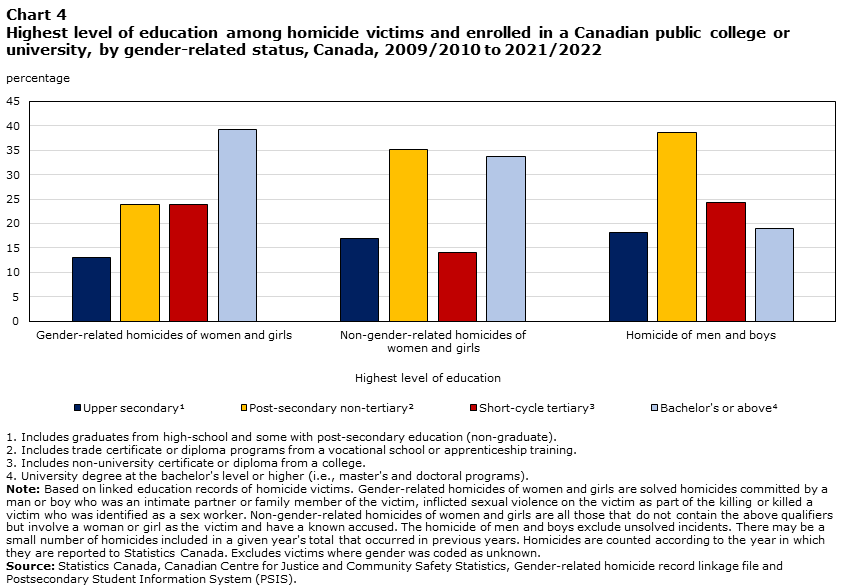
Among those enrolled in a post-secondary institution at some point during the reference period, two in five (39%) gender-related homicide victims were in a bachelor’s degree program or higher, followed by equal proportions in short-cycle tertiary education (e.g., college) (24%) and post-secondary non-tertiary (e.g., apprenticeship or trade) (24%) programs (Chart 4). Non-gender-related homicide victims, on the other hand, were most commonly enrolled in a non-tertiary program (35%) or in a bachelor’s degree program or higher (34%). The largest proportion of men and boys (39%) were also enrolled in a non-tertiary program and comparatively fewer in a bachelor’s degree program or higher (19%).
Chart 4 start
Data table for Chart 4
| Highest level of education | Upper secondary Data table for Chart 4 Note 1 | Post-secondary non-tertiary Data table for Chart 4 Note 2 | Short-cycle tertiary Data table for Chart 4 Note 3 | Bachelor's or above Data table for Chart 4 Note 4 |
|---|---|---|---|---|
| percentage | ||||
Source: Statistics Canada, Canadian Centre for Justice and Community Safety Statistics, Gender-related homicide record linkage file and Postsecondary Student Information System (PSIS). |
||||
| Gender-related homicides of women and girls | 13.1 | 23.9 | 23.9 | 39.2 |
| Non-gender-related homicides of women and girls | 16.9 | 35.2 | 14.1 | 33.8 |
| Homicide of men and boys | 18.2 | 38.6 | 24.2 | 18.9 |
Chart 4 end
Higher educational attainment is often seen as a protective factor against violence generally and homicide specifically through improved economic opportunities, neighbourhood environments and social networks, all of which can reduce exposure to violence and economic dependency on an abuser (Campbell et al., 2009; UN Women, 2015). However, linked data show that violence occurs across all educational levels and that higher education does not, in itself, function as a protective factor against gender-related homicide.
About one in six gender-related homicide victims are immigrants or non-permanent residents, a proportion lower than their representation in the general population
Based on linked data, just under one in six (16%) victims of gender-related homicide were immigrantsNote or non-permanent residentsNote who had come to Canada since 1980, a proportion similar to that of persons accused of these homicides (17%) (see Sutton-Preddie, 2025). These proportions are lower than in the general population, where according to the 2021 Census, about one-fifth (21%) of people in Canada are immigrants who were admitted since 1980 and non-permanent residents (Statistics Canada, 2023a).Note The proportion of gender-related homicide victims who were immigrants or non-permanent residents is, however, greater than what was found for the two reference groups where 10% of non-gender-related homicide victims and 12% of men and boys were immigrants or non-permanent residents.
Among gender-related homicide victims who were immigrants, just over one-fifth (21%) were killed within their first five years in Canada, higher than other homicide victims (12%).Note While gender-related homicide can affect any woman or girl, regardless of age, socioeconomic status, educational background, or ethnic or racial identity, immigrant and non-permanent residents may experience stressors related to the integration process that can affect family and relationship dynamics in ways that increase vulnerability to violence. Recent immigrants (i.e., those who have been in Canada for five years or less) may experience social isolation and exclusion, language barriers, socioeconomic hardships,Note and limited access to resources and services while adapting to a new cultural environment (Mamo et al., 2015; Okeke-Ihejirika et al., 2018; Rossiter et al., 2018). These challenges can heighten dependence on partners, particularly when their immigrant status is tied to a sponsoring partner, and reduce access to formal and informal support. Such conditions may increase the risk of interpersonal violence and, in the most severe cases, homicide.
Nearly two-thirds of gender-related homicide victims visited an emergency department in the year prior to their death
Considering that a sizable proportion of gender-related homicide victims had experienced police-reported violence prior to their death, healthcare settings represent a critical institution for intervention and prevention. While many women who experience intimate partner violence do not use formal services or seek medical treatment (Cotter, 2021b; Truman & Morgan, 2014), previous research shows that femicide victims have a higher probability of attending an emergency department compared to non-victims of the same age and socioeconomic status (Mamo et al., 2015; Sharps et al., 2001).
Among homicide victims who had visited an emergency department prior to their homicide,Note 64% of gender-related homicide victims had attended within the year prior to their death; fewer than what was found among non-gender-related victims (74%) and homicide victims who were men and boys (72%) (Table 4).
Overall, among those who had visited an emergency department in the year prior to the homicide, gender-related homicide victims had an average of 3.2 admissions, similar to non-gender-related victims (4.0) and men and boys (3.4). While a small proportion (10%) of gender-related victims had five or more visits in the year prior to their homicide, these women and girls made up 51% of all emergency room visits with an average of 10 admissions per victim in that year. Within the general population, most adults who visit an emergency department do so only once per year, but these data align with a small proportion of patients who attend frequently (i.e., four or more visits per year) and are often considered at high risk of experiencing poor outcomes, including mortality (Moe et al., 2022).
About two-thirds (65%) of all Indigenous gender-related homicide victims had visited an emergency department at some point since 2009 but prior to their death. Of these women and girls, 65% did so within a year prior to their death. Of this group, there was an average of 4.3 admissions, lower than what was the case for Indigenous non-gender-related victims (5.9) and Indigenous men and boys (4.7).
More than 6,500 emergency department visits recorded among gender-related homicide victims between 2009 and their death
Among gender-related homicide victims, since 2009, there were 6,596 recorded visits to an emergency department prior to the homicide, limited to visits for which the reason for admission was known. The condition thought to be most responsible for the patient’s hospitalization varied.Note One fifth (19%) were for injuries, poisonings and other consequences of external causes,Note 15% for symptoms, signs and abnormal clinical and laboratory findings, not otherwise classified,Note and another 13% for mental and behavioural disorders.Note For Indigenous gender-related homicide victims, the largest proportion had also attended an emergency department for injuries, poisoning and other consequences of external causes (21%), but compared to gender-related homicide victims overall, a higher proportion had visited for mental or behavioural disorders (20%).
It is not possible to determine what proportion of injuries, or any other healthcare contact for that matter, was due to gender-related violence. Data from the 2019 General Social Survey on Victimization revealed that one-third of all victims of spousal violence reported being physically injured, and of those, 11% were hospitalized as a result (Conroy, 2021a). Different self-report data show women and girls who have experienced physical or sexual assault are more likely to report their mental health as fair or poor and less likely to report being very satisfied with their life than women without those experiences (Cotter & Burczycka, 2026). As a result, patterns of healthcare use may still reflect the broader health consequences of violence and related stressors, even when the specific cause of the visit is not recorded.
Among gender-related homicide victims who filed their taxes, more than a third had at least one child under the age of 18
To explore socioeconomic characteristics of homicide victims, tax records were analyzed.Note According to these records, the largest proportion of gender-related homicide victims had filed as single, never having been married (41%), followed by married (39%) and separated, divorced or widowed (20%).Note For non-gender-related victims and men and boy victims, larger proportions had filed as single (53% and 68%, respectively). Aligned with these patterns, more gender-related homicide victims had at least one child under the age of 18 living at the same address (38%) compared with non-gender-related victims (33%) and men and boy victims (20%).Note In all, at least 367 children were left without a mother following the gender-related homicide.Note
Employment income more commonly reported by victims of gender-related homicide than other homicide victims
Among homicide victims who filed their taxes between 2009 and 2021, close to three in five (56%) gender-related homicide victims claimed employment income on their taxes, much higher than victims of a non-gender-related homicide (38%) and slightly higher than men and boys (53%) (Table 5). Similarly, fewer victims of gender-related homicide (17%) claimed income from social assistance than what was found for other homicide victims (28% and 29%, respectively), although among all three groups, the largest proportion reported their main source of income as coming from government transfers (48%, 61% and 50%, respectively).Note Note
Reflecting longstanding socioeconomic inequities in Canada, when compared with gender-related homicide victims overall, a greater proportion of Indigenous victims showed evidence of economic inequity. For example, fewer Indigenous victims claimed employment income on their taxes (32% versus 56% of gender-related homicide victims overall), more received social assistance (27% versus 17%), and nearly three-quarters (72%) reported government transfers as their main source of income (compared with 48% of all gender-related victims).
Two in five gender-related homicide victims may be classified as having low income
For many people in Canada, financial worries are a leading source of stress that can negatively affect mental and physical wellbeing as well as interpersonal relationships (Government of Canada, 2025b). However, financial hardship does not exist in a vacuum. Rather than resulting from individual circumstances or choices, financial hardship is often embedded within broader social, economic, and structural inequalities (e.g., labour market precarity, rising cost of living, unequal access to education and employment, systemic discrimination) that have compounding effects over time.
Certain populations—including women, individuals living with mental illness or disabilities, immigrants, racialized communities, Indigenous Peoples, seniors, and single parents—are disproportionately affected by the aforementioned structural factors and the corresponding economic hardship (Employment and Social Development Canada, 2025). While violence in general—and homicide specifically—can occur across all socioeconomic groups, those living with lower incomes face heightened risk because financial insecurity is often closely linked with housing instability, residence in disadvantaged neighbourhoods, and reduced access to protective resources and services, collectively increasing vulnerability to victimization and overall exposure to violence. This relationship is, however, complex, as economic insecurity can act as both a contributor and a consequence of experiencing violence.
Of all homicide victims killed between 2010 and 2022 who filed their taxes within three years preceding their death, close to half (47%) were classified as having low-income, where their family’s income was less than half the national median income of families with the same size (Table 5).Note Specifically, two in five (41%) gender-related homicide victims were classified as having low income, more than double what was found among families in the general population (17% in 2022) (Statistics Canada, 2025), but lower compared to other homicide victims (49%).
Owing in large part to historical and ongoing colonial laws, policies and practices that restrict socioeconomic opportunities among Indigenous Peoples, Indigenous victims of homicide were often in a greater degree of economic disadvantage. Of all Indigenous homicide victims killed between 2010 and 2022 who filed their taxes within the three years prior to their death, seven in ten (70%) were in a low-income situation. Specifically, close to three quarters (72%) of Indigenous gender-related victims were classified as having low income; lower than Indigenous non-gender-related victims (81%) but slightly higher than Indigenous men and boys (68%).
Summary
This Juristat article examined prior police-reported violence against victims of homicide, their post-secondary education, where they were an immigrant or non-permanent resident, previous healthcare contacts and socioeconomic situation. The analytical focus was on women and girls killed in a gender-related homicide incident, disaggregated by Indigenous identity, where possible. In each analysis, comparisons were drawn against other homicide victims: women and girls killed in a non-gender-related homicide incident and homicides of men and boys. At a high-level, women and girl victims, regardless of gender-related status, shared more similarities to each other than with men and boy victims, but also differed in many important respects.
Based on data from the Homicide Survey, from 2009 to 2022, gender-related homicide victims were older, a greater proportion were in a marital relationship and were more often employed relative to other victims. Linked data also demonstrated that gender-related homicide victims differed in their type of postsecondary education, and socioeconomic circumstances compared to other homicide victims. For example, a higher proportion had been enrolled in a bachelor’s degree program at any point since 2009/2010, and, overall, a higher proportion reported employment income on their taxes and fewer could be classified as being in a low-income situation. Even so, two in five gender-related homicide victims could still be deemed as having low income, more than double what was found among families in the general population.
More than a quarter of gender-related homicide victims had at least one prior contact with police as a victim of violence since 2009, similar to what was found for other victims. Gender-related homicides, however, were unique in that the largest proportion of prior contacts involved an intimate partner as the accused and were more commonly victimized by the same person later accused in their homicide. Across all three homicide groups, most prior police contacts were for physical assault offences and involved minor physical injury. Although not necessarily tied directly to these physical assaults, nearly two-thirds of gender-related homicide victims with a prior healthcare contact had attended an emergency department in the year prior to their death.
Linked data files demonstrated that many women and girl homicide victims had prior contact with police as victims of violence, attended emergency departments for injuries and could benefit from supports and programs to encourage economic empowerment. However, given that most gender-related homicide victims shared a close relationship with the accused and proximity complicates disclosure of violent experiences, this limitation must be acknowledged as a critical factor in efforts to protect victims. Regardless, data presented here can inform new or existing protection and safety planning programs to prevent violence and gender-related homicide.
Detailed data tables
Data sources and methodology
Homicide Survey
The Homicide Survey collects police-reported data on the characteristics of all homicide incidents, victims and accused persons in Canada. The Homicide Survey began collecting information on all murders in 1961 and was expanded in 1974 to include all incidents of manslaughter and infanticide. Although details on these incidents are not available prior to 1974, counts are available from the Uniform Crime Reporting (UCR) Survey and are included in the historical aggregate totals.
When a homicide becomes known to police, the investigating police service completes the survey questionnaires, which are then sent to Statistics Canada. There are cases where homicides become known to police months or years after they occurred. These incidents are counted in the year they become known to police (based on the report date). Information on persons accused of homicide is only available for solved incidents (i.e., where at least one accused has been identified). Accused characteristics are updated as homicide cases are solved, and new information is submitted to the Homicide Survey. Information collected through the victim and incident questionnaires is also updated accordingly when a case is solved. For incidents involving more than one accused, only the relationship between the victim and the closest accused is recorded.
The year 2019 marked the first cycle of collection of the Homicide Survey data for which information on gender identity was reported for victims and persons accused of homicide. Gender refers to the gender a person publicly expresses in their daily life, including at work, while shopping or accessing other services, in their housing environment or in the broader community. Prior to 2019, Homicide Survey data was presented by the sex of the victims and accused persons. Sex and gender refer to two different concepts. Caution should be exercised when comparing counts for sex with those for gender. Given that small counts of victims and accused persons reported or were identified as being non-binary, the aggregate Homicide Survey data available to the public has been recoded to distribute these counts to either “men and boys” or “women and girls” in order to ensure the protection of confidentiality and privacy. Victims and accused persons who reported or were identified as being non-binary have been distributed to either men or women categories based on the regional distribution of victims’ or accused persons’ gender.
Incident-based Uniform Crime Reporting Survey
The Incident-based Uniform Crime Reporting (UCR) Survey is a microdata survey that captures detailed information on crimes reported by police, including the characteristics of victims, accused persons and incidents. Coverage from the UCR2 between 2009 and 2022 is estimated at 99% of the population of Canada and includes only those police services who have consistently responded to the survey to allow for comparisons over time.
The option for police to code victims as “non-binary” in the UCR Survey was implemented in 2018. In the context of the UCR Survey, “non-binary” refers to a person who publicly expresses as neither exclusively male nor exclusively female. Given that small counts of victims and accused persons identified as being gender diverse may exist, the UCR data available to the public has been recoded with these victims distributed in the “men and boys” or “women and girls” categories based on the regional distribution of victims’ gender. This recoding ensures the protection of confidentiality and privacy of victims.
Social data linkage environment (SDLE) data files
Data from the Homicide Survey was placed in the Social Data Linkage Environment (SDLE), which is a highly secure environment at Statistics Canada that facilitates the creation of linked population data files for social analysis. During this process, each victim and person accused of homicide was assigned an SDLE identifier which corresponds to Statistics Canada source index files (e.g., tax records, vital statistics registration records, immigration data). These identifiers are then matched to individual records in other datasets (e.g., education, health, income) for analysis.
In the SDLE, 94% of all homicide records were linked successfully. For this article, the Homicide Survey was linked to multiple other Canadian datasets, including:
- The Postsecondary Student Information System to examine educational backgrounds of victims;
- The Discharge Abstract Database and National Ambulatory Care Reporting System to analyze prior healthcare contacts among victims;
- The Immigrant Landing File and Non-permanent Resident file, included in the Longitudinal Immigration Database, to determine the proportion of homicide victims who were admitted to Canada and when; and
- The T1 Family File to capture the socioeconomic profile of victims.
Postsecondary Student Information System (PSIS)
An annual administrative dataset of all Canadian (provincial and territorial) public college and university enrolments and graduations by type of program, type of credential, and field of study for each reporting year. PSIS collects information pertaining to the programs and courses offered at an institution, as well as demographic information for the students and the program(s) and course(s) in which they were registered, or from which they have graduated. The Education and Labour Market Longitudinal Platform includes longitudinal PSIS data from academic year 2009/2010 onwards. For more information, see Statistics Canada’s PSIS information page.
Longitudinal Immigration Database (IMDB)
An administrative dataset for all immigrants since 1952 and non-permanent residents since 1980. The IMDB provides detailed and reliable information on socioeconomic outcomes of immigrants after their admission, such as employment income and mobility. It connects short- and long-term outcomes with characteristics at admission, such as immigrant admission category, source country and knowledge of official languages. The database includes several files, such as the Immigrant Landing File and the Non-permanent Resident File which were used in this article. These files restrict analysis to individuals who were admitted to Canada since 1980. For more information, see Statistics Canada IMDB information page.
Discharge Abstract Database (DAD)
The DAD captures administrative, clinical and demographic information on hospital discharges (including deaths, sign-outs and transfers) from all provinces and territories, except Quebec. For this record linkage, the DAD files for fiscal years from 2009/2010 to 2021/2022 were included in the analysis. As a result, this analysis does not include homicide victims who had hospital discharges prior to 2009.
The data elements collected through the DAD can vary year over year and by jurisdiction. Collection of each data element may be mandatory, mandatory if applicable, optional or not applicable. Acute inpatient care reporting is mandated in all provinces and territories except Quebec. Thus, this record linkage focuses only on those hospitalizations.
For more information, see the DAD metadata website. Please note that not all DAD data elements are available in the analytical file for this record linkage project.
National Ambulatory Care Reporting System (NACRS)
The NACRS captures information on emergency department (ED) registrations. For the period under study, 2009/2010 to 2021/2022, submission of ED data to NACRS was mandated in Ontario and Alberta, and only partially mandated or not mandated in the other provinces and territories. Therefore, ED visit information may not be complete for all provinces and territories. Specifically, data may be biased toward the context in Ontario and Alberta as they account for the largest proportion of the study cohort (64%) and are the only provinces with mandatory ED reporting (including reporting of diagnoses). These provinces recorded the highest frequency of ED visits. Data are not available for homicide victims who had visited an ED prior to 2009
Reasons for visits were classified using the International Statistical Classification of Diseases and Related Health Problems, 10th Revision, Canada (ICD 10 CA). Classification was based on the main problem and other problems recorded for the visit, and on the patient’s diagnosis at the time of discharge from the emergency department when the main problem was not reported. Classifications include a small number of unconfirmed diagnoses where firm confirmatory was still pending at the time of the coders’ abstraction. A classification code was unavailable for 11% of visits and excluded from analysis.
For more information, see the NACRS metadata website.
The T1 Family File (T1FF)
The T1FF provides information on individual and family income, employment, and family composition. These data are collected primarily from income tax returns submitted to the Canada Revenue Agency (CRA). Although rare, if a person had more than one tax record in a given year, the most complete record was retained.
The T1FF is only available for individuals who filed their taxes between 2009 and 2022. To maximize the coverage in the current study, tax records could have been up to three years prior to the homicide. Specifically, the relevant tax record had to be from the year immediately preceding the homicide or from one of the two prior tax years—up to three years before the homicide.
For more information, see Statistics Canada’s T1FF information page.
References
Bill C-16: Protect Victims Act. (2025). 2nd reading February 2, 2026, 45th Parliament, 1st session. Retrieved from the Parliament of Canada website.
Burczycka, M., Pedneault, C., & Haringa, M. (2026). Socioeconomic characteristics of Indigenous adults reconvicted after release form provincial custody, 2016/2017. Juristat. Statistics Canada Catalogue no. 85-002-X.
Campbell, J., Webster, D.W., & Glass, N. (2009). The Danger Assessment: Validation of a lethality risk assessment instrument for intimate partner femicide. Journal of Interpersonal Violence, 24(4), 653-674.
Canadian Heritage. (2024). Changing systems, transforming lives: Canada’s anti-racism strategy 2024-2028.
Canadian Institute for Health Information (CIHI). (2025). Injury and trauma emergency department and hospitalization statistics.
Canadian Institute for Health Information (CIHI). (2024). Acute care.
Centers for Disease Control and Prevention (CDC). (2024). Intimate partner violence prevention: Risk and protective factors.
Conroy, S. (2021a). Spousal violence in Canada, 2019. Juristat. Statistics Canada Catalogue no. 85-002-X.
Conroy, S. (2021b). Family violence in Canada: A statistical profile, 2019. Juristat. Statistics Canada Catalogue no. 85-002-X.
Cotter, A., & Heidinger, L. (2026). Recontact with police among child and youth victims of violent crime, 2010 to 2024. Juristat. Statistics Canada Catalogue no. 85-002-X.
Cotter, A., & Burczycka, M. (2026). Gender differences in experiences of violence and unwanted sexual behaviour in Canada, 2025. Juristat. Statistics Canada Catalogue no. 85-002-X.
Cotter, A. (2021a). Criminal victimization in Canada, 2019. Juristat. Statistics Canada Catalogue no. 85-002-X.
Cotter, A. (2021b). Intimate partner violence in Canada, 2018: An overview. Juristat. Statistics Canada Catalogue no. 85-002-X.
Czarnietzki, M., Ricono-Kaufhold, S., Darjee, R., Davis, M., & Nanev, A. (2024). Murdering the person closest to you: Similarities and differences between intimate partner sexual homicide and non-intimate partner sexual homicide. Behavioral Sciences & the Law, 42, 560-587.
Dawson, M., & Carrigan, M. (2021). Identifying femicide locally and globally: Understanding the utility and accessibility of sex/gender-related motives and indicators. Current Sociology, 69(5), 682-704.
Dawson, M., Sutton, D., Carrigan, M., Grand’Maison, V., Bader, D., Zecha, A., & Boyd, C. (2019). #CallItFemicide: Understanding gender-related killings of women and girls in Canada 2019. Canadian Femicide Observatory for Justice and Accountability.
Department of Justice. (2024). Just facts: The overrepresentation of Indigenous people in the criminal justice system.
Department of Justice. (2023). Coercive control as a form of family violence.
Domestic Violence Death Review Team. (2024). DVDRT annual report 2021–23. Coroners Court of New South Wales.
Employment and Social Development Canada. (2025). We can do better: it is not a safety net if the holes are this big – the 2025 Report of the National Advisory Council on Poverty.
Garcia-Vergara, E., Almeda, N., Martin Rios, B., Becerra-Alonso, D., & Fernandez-Navarro, F. (2022). A comprehensive analysis of factors associated with intimate partner femicide: A systematic review. International Journal of Environmental Research and Public Health, 19(12), 7336.
Government of Canada. (2025a). Protecting Victims Act: Proposed legislation to protect victims and keep kids safe from predators.
Government of Canada. (2025b). Financial stress and its impacts.
Government of Canada. (2022). The National Action Plan to End Gender-Based Violence.
Heidinger, L. (2022). Violent victimization and perceptions of safety: Experiences of First Nations, Métis and Inuit women in Canada. Juristat. Statistics Canada Catalogue no. 85-002-X.
Heidinger, L. (2021). Intimate partner violence: Experiences of First Nations, Métis and Inuit women in Canada, 2018. Juristat. Statistics Canada Catalogue no. 85-002-X.
Johnson, H., Eriksson, L., Mazerolle, P., & Wortley, R. (2019). Intimate femicide: The role of coercive control. Feminist Criminology, 14(1), 3-23.
Koppa, V., & Messing, J.T. (2021). Can justice system interventions prevent intimate partner homicide? An analysis of rates of help seeking prior to fatality. Journal of Interpersonal Violence, 36(17-18), 8792-8816.
Mamo, C., Bianco, S., Dalmasso, M., Girotto, M., Mondo, L., & Penasso, M. (2015). Are emergency department admissions in the past two years predictors of femicide? Results from a case-control study in Italy. Journal of Family Violence, 30, 853-858.
Missing and Murdered Indigenous Women and Girls. (2019). Reclaiming Power and Place: The Final Report of the National Inquiry into Missing and Murdered Indigenous Women and Girls.
Moe, J., Wang, E., McGregor, M.J., Schull, M.J., Dong, K., Holroyd, B.R., Hohl, C.M., Grafstein, E., O’Sullivan, F., Trimble, J., & McGrail, K.M. (2022). Subgroups of people who make frequent emergency department visits in Ontario and Alberta: A retrospective cohort study. CMAJ Open, 10(1), E232-E246.
Office of the Chief Coroner. (2024). Domestic Violence Death Review Committee: 2019-2020 annual report.
Okeke-Ihejirika, P., Yohani, S., Muster, J., Ndem, A., Chambers, T., & Pow, V. (2018). A scoping review on intimate partner violence in Canada’s immigrant communities. Trauma, Violence, & Abuse, XX(X), 1-23.
Perreault, S. (2022). Victimization of First Nations people, Métis and Inuit in Canada. Juristat. Statistics Canada Catalogue no. 85-002-X.
Rogers, M.M., Ali, P., Thompson, J., & Ifayomi, M. (2023). “Survive, learn to live with it … or not”: A narrative analysis of women’s repeat victimization using a lifecourse perspective. Social Science & Medicine, 338, 1-8.
Rossiter, K.R., Yercich, S., Baobaid, M., Al Jamal, A., David, R., Fairbairn, J., Dawson, M., & Jaffe, P. (2018). Domestic homicide in immigrant and refugee populations: Culturally-informed risk and safety strategies (4). London, ON: Canadian Domestic Homicide Prevention Initiative.
Sharps, P.W., Koziol-McLain, J., Campbell, J., McFarlane, J., Sachs, C., & Xu, X. (2001). Health care providers’ missed opportunities for preventing femicide. Preventative Medicine, 33, 373-380.
Stark, E. (2007). Coercive control: How men entrap women in personal life. New York: Oxford University Press.
Statistics Canada. (2026). Table 14-10-0287-01 Labour force characteristics, monthly, seasonally adjusted and trend-cycle.
Statistics Canada. (2025). Table 11-10-0018-01 After-tax low income status of tax filers and dependents based on Census Family Low Income Measure (CFLIM-AT), by family type and family type composition.
Statistics Canada. (2024). Canadian Income Survey, 2022. The Daily. Statistics Canada Catalogue no. 11-001-X.
Statistics Canada. (2023a). Census Profile. 2021 Census of Population. Statistics Canada Catalogue no. 98-316-X2021001. Ottawa. Released November 15, 2023.
Statistics Canada. (2023b). Canadian Income Survey, 2021. The Daily. Statistics Canada Catalogue no. 11-001-X.
Statistics Canada. (2022a). Table 17-10-0060-01 Estimates of population as of July 1st, by marital status or legal marital status, age and sex.
Statistics Canada. (2022b). Indigenous population continues to grow and is much younger than the non-Indigenous population, although the pace of growth has slowed. The Daily. Statistics Canada Catalogue no. 11-001-X.
Statistics Canada. (2022c). Statistical profile of intimate partner violence in Canada.
Sutton-Preddie, D. (2025). Police contacts and sociodemographic characteristics of persons accused of gender-related homicide in Canada, 2009 to 2022. Juristat. Statistics Canada Catalogue no. 85-002-X.
Sutton, D., & Cotter, A. (2023). Court outcomes associated with the gender-related homicide of women and girls in Canada, 2009/2010 to 2020/2021. Juristat. Statistics Canada Catalogue no. 85-002-X.
Sutton, D. (2023). Gender-related homicide of women and girls in Canada. Juristat. Statistics Canada Catalogue no. 85-002-X.
Truman, J.L., & Morgan, R.E. (2014). Nonfatal domestic violence, 2003-2012. Bureau of Statistics. United States Department of Justice.
Truth and Reconciliation Commission of Canada. (2015). Honouring the truth, reconciling for the future: Summary of the final report of the Truth and Reconciliation Commission of Canada.
United Nations Office on Drugs and Crime (UNODC). (2025). Femicides in 2024: Global estimates of intimate partner/family member femicides.
United Nations Office on Drugs and Crime (UNODC). (2024). Femicides in 2023: Global estimates of intimate partner/family member femicides.
United Nations Office on Drugs and Crime (UNODC). (2018). Global study on homicide: Gender-related killing of women and girls.
UN Women. (2015). A framework to underpin action to prevent violence against women.
- Date modified: