Statistics Canada
www.statcan.gc.ca
Common menu bar links

July 2008

Archived Content
Information identified as archived is provided for reference, research or recordkeeping purposes. It is not subject to the Government of Canada Web Standards and has not been altered or updated since it was archived. Please "contact us" to request a format other than those available.
Analysis
Consumer prices rose 3.4% in July 2008 compared to July 2007, an increase from the 3.1% rise recorded in the 12 months to June 2008. Higher gasoline prices continued to exert the strongest upward pressure on consumer prices.
July saw the highest 12-month increase since March 2003. A climb in gasoline prices was the primary source of higher consumer prices in July. The 12-month variation in the Consumer Price Index (CPI) and the gasoline price index have been increasing at a faster pace over the past four months.
Consumer prices excluding gasoline advanced 2.1%, up from the 1.8% 12-month rate of growth posted for June.
Lower prices to purchase and lease passenger vehicles partially offset the impact of rising gasoline prices and eased the overall increase in transportation costs for consumers.
On a month-to-month basis, the seasonally unadjusted all-items CPI rose 0.3% between June and July 2008, a slowdown from the 0.7% increase posted between May and June 2008. A 2.2% drop in prices to purchase and lease passenger vehicles from June to July 2008 was the largest downward contributor on the monthly index.
The seasonally-adjusted monthly all-items CPI advanced 0.3% between June and July 2008, down from the 0.8% rise posted for June.
12-month change: Consumers continue to feel the pinch of higher gasoline prices
Gasoline prices were the main factor behind the climb in consumer prices from July 2007 to July 2008.
Prices at the pump rose 28.6% in the 12 months to July 2008. While gasoline prices continued to rise, the overall increase in transportation costs were partially offset by lower prices to purchase and lease passenger vehicles, which fell 8.9% in July compared with the same month a year earlier. Overall, transportation costs rose by 6.1% in the 12 months to July 2008.

The mortgage interest cost index advanced 8.5% from July 2007 to July 2008, down from the 9.0% increase posted in the 12 months to June. The slowdown in the rise in mortgage interest cost was due more to a softening of new housing prices rather than to lower mortgage interest rates.
Higher natural gas prices (+25.0%) also contributed to the rise in consumer prices in July. The increase in natural gas prices was partly due to a decline in prices that occurred at the same time last year and to recent increases related to oil prices.

Natural gas storage levels remained somewhat below normal due largely to high demand for natural gas to fuel electric generation for air conditioning. Increased costs associated with moving gas from producing regions have also influenced the rise in natural gas prices.
Prices for fuel oil and other fuels, products which are derived from oil, also put significant upward pressure on consumer prices in July.
A 4.3% rise in prices for food purchased from stores, led by a 13.2% rise in prices for bakery products, continued to exert upward pressure on consumer prices in July. Price increases for other food products closely related to grain, such as breakfast cereal, rice, pasta and flour and flour based mixes, continued to increase in the 12 months to July 2008.

The drop in prices to purchase and lease passenger vehicles helped to offset the rise of the all-items index in July. Competition among vehicle manufacturers remains strong as manufacturers compete for market share by increasing incentives.
Prices for computer equipment and supplies continued to fall in July (-12.0%), although the decline was the smallest since August 2003. Prices for other electronic equipment items such as video equipment and photographic equipment and supplies also continued their downward trend in July.
Various specials offered on furniture items also helped to mitigate the rise in consumer prices.
Lower prices for women's clothing also helped to dampen the rise in consumer prices in July. After remaining unchanged in June, prices for women's clothing fell 2.9% in the 12 months to July, primarily as a result of a large number of sales.
The provinces: The three most eastern provinces bear the brunt of higher increases in consumer prices
Consumers in Prince Edward Island (+5.3%), Newfoundland and Labrador (+4.2%), and Nova Scotia (+4.2%) faced the largest consumer price increases.
Gasoline prices contributed largely to the rise in consumer prices observed across the country. Gasoline prices rose the most in British Columbia (+31.5%).
Other provinces, especially those in Central Canada, also posted strong price increases for gasoline. In Ontario, gasoline prices rose 30.1%, and in Quebec, they increased 30.9%.
Besides higher prices for gasoline, price increases for other energy components, such as fuel oil and other fuels and electricity, rose sharply in Newfoundland and Labrador, Prince Edward Island and Nova Scotia in the 12 months to July. The rise in these energy components largely accounted for the growth in consumer prices posted in these provinces.
In Alberta, it was higher costs for owned accommodation that primarily pushed up consumer prices 3.5% in the 12 months to July. This was a substantial slowdown from the 4.4% rate of growth posted in June.
While consumers across the country faced higher prices for gasoline and mortgage interest costs, lower prices to purchase and lease passenger vehicles helped to offset these price increases. Changes in prices to purchase and lease passenger vehicles ranged from a 7.6% decrease in Quebec to an 11.4% decline in New Brunswick.
Month-to-month: Consumer prices advance at slowest pace since the start of 2008
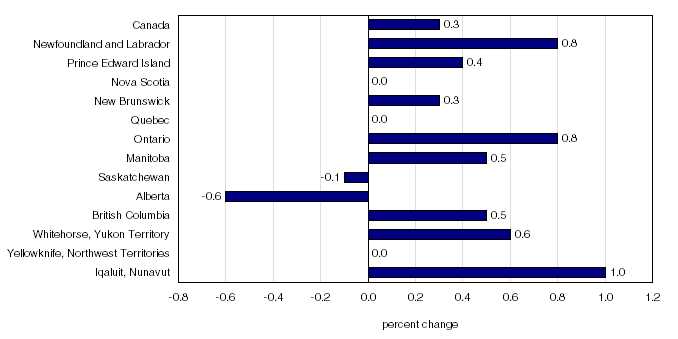
The seasonally unadjusted month-to-month variation in consumer prices rose 0.3% in July, after increasing 0.7% in June. This was the slowest pace since the 0.2% drop recorded in January 2008.
Putting upward pressure on the monthly CPI in July was an increase in prices for energy components: An 8.8% increase in prices for natural gas, a 1.2% climb in gasoline prices and a 1.9% rise in prices for electricity.
A 2.2% drop in prices to purchase and lease passenger vehicles in July compared with June was the largest downward contributor to the monthly change.
On a seasonally adjusted monthly basis, consumer prices rose 0.3% in July, down from the 0.8% rise posted in June.
The 12-month variation of the Bank of Canada core index remains unchanged
The Bank of Canada's core index rose 1.5% from July 2007 to July 2008. This index is obtained by removing from the all-items CPI the effect of changes in indirect taxes and eight of the most volatile components identified by the Bank of Canada. These volatile components are fruit, fruit preparations and nuts; vegetables and vegetable preparations; mortgage interest cost; natural gas; heating oil and other fuels; gasoline; inter-city transportation; and tobacco products and smokers’ supplies.
This is identical to the 12-month variation posted in the previous three months. The drop in prices to purchase and lease passenger vehicles helped to mitigate price increases in other consumer items included in the core index such as passenger vehicle insurance and bakery products.
The monthly seasonally unadjusted core index advanced 0.1%, identical to the rate of growth posted a month earlier.
The seasonally-adjusted monthly core index edged up 0.1% in July, after advancing 0.3% in June.