
An overview of recent macroeconomic developments in Canada

Archived Content
Information identified as archived is provided for reference, research or recordkeeping purposes. It is not subject to the Government of Canada Web Standards and has not been altered or updated since it was archived. Please "contact us" to request a format other than those available.
Organization
Objective — Highlight recent macroeconomic developments, focusing on:
- Trends in the post-recession period (2010 to current)
- Key developments through the first half of 2014
Major themes
- Economic growth and labour market conditions
- Financial conditions in the household sector
- International dimensions of Canada's economy
Developments in the Canadian economy, post-recession
- Pace and composition of GDP growth (2010-11 vs. 2012-13)
- Consumer-led growth and household sector leverage
- Business investment spending (2010-11 vs. 2012-14)
- Rebalancing of growth from domestic demand to trade
- Pace of employment creation (2010-12 vs. 2013-14)
- Lower inflation (2013) and stable borrowing costs; impact on household sector and real estate market
- Exchange rate movements (2013-14)
Key developments through the second quarter of 2014
- Changes in the pace and composition of economic growth
- Real GDP accelerates (3.1% annualized) on broad-based gains in Q2
- Drivers: exports, household spending, residential investment
- Contributions to growth widespread across major industrial sectors
- Steady gains through the spring across many of the major output indicators (merchandise trade, manufacturing sales, wholesale and retail sales, building permits, housing starts)
- Employment growth remains subdued during the first half of 2014
- Little growth in the private sector; two-thirds of total employment growth in the six months to June (+53,000) in self-employed
- Decline in employment rates during the first half of 2014
- Consumer prices accelerate through the second quarter but remain in Bank of Canada's target range
- Drivers: food, shelter and transportation
- Annual inflation moderates during the summer months
- Exchange rate movements
- Canadian dollar depreciates during Q1, rebounds through Q2 but remains significantly weaker than pre/post recession
- Non-energy exports advance steadily during the first half of 2014
- Auto exports advance on higher volumes, led export growth in Q2
Topics
- Topic 1 — Economic growth and labour market conditions
- Topic 2 — Financial conditions in the household sector
- Topic 3 — International dimensions of Canada's economy
Topic 1 — Economic growth and labour market conditions
Canada's economic growth in a comparative context
Question: How does economic growth in Canada compare with growth in other major economies?
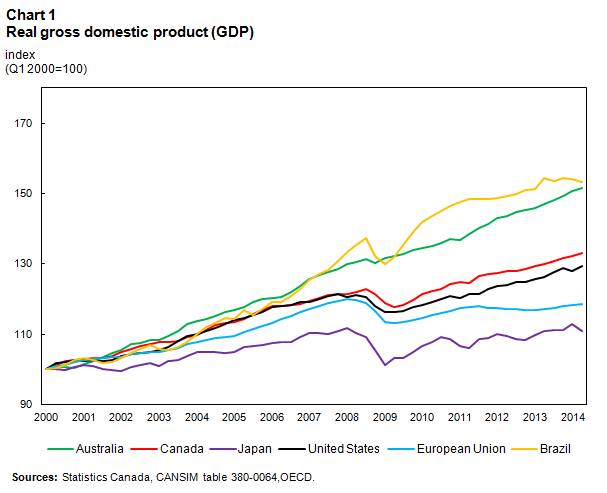
Real GDP, annual growth rate
Question: How rapidly has the economy expanded in the post-2000 period, and subsequent to the 2008-09 recession?

Real GDP, expenditure components
Question: What types of final expenditures have supported economic growth in Canada? And how have the pace and composition of growth changed more recently?

Real GDP, by industry
Question: How have different industrial sectors fared during the recession and the recovery? And how broad based were gains during the spring of 2014?

Real GDP growth, by province
Question: How has the economy expanded in different regions of the country?

Real GDP and employment
Question: How does employment growth compare with economic growth in the post-recession period?

Net employment growth
Question: How does the composition of employment growth in recent years compare with employment gains in the early to mid 2000s?

Question: How does employment growth in goods industries compare to service industries?

Question: To what extent has the pace of private sector job creation slowed during 2014?

Question: To what extent has employment growth slowed among core-age workers?

Labour market conditions
Question: How have Canada's employment rate and unemployment rate adjusted in the post-recession period?

Unemployment rate by province
Question: How does unemployment vary across Canada?

Topic 2 — Financial conditions in the household sector
Inflation in the Canadian economy
Question: How has the consumer price index evolved?
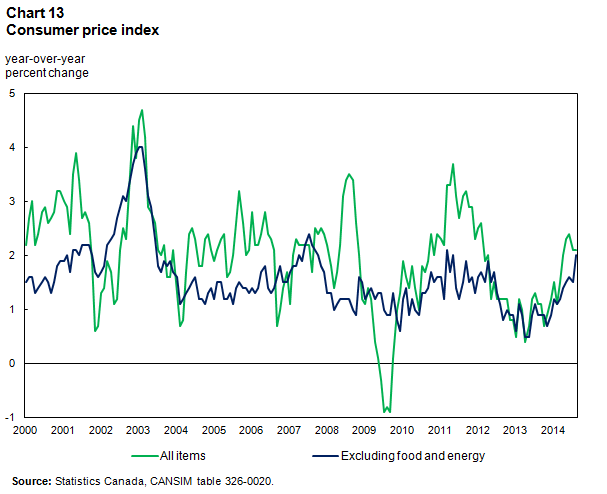
Lending and borrowing in the Canadian economy
Question: How have the net lending and borrowing positions of different sectors of the economy changed in the post-recession period?

Household sector leverage and debt service costs
Question: How much debt are consumers carrying as a proportion of their disposable income? How has the pace of leveraging changed in the post-recession period?

Household sector assets and liabilities
Question: How has the net worth of households changed subsequent to the 2008-09 recession?

Household sector worth
Question: How have financial and non-financial assets contributed to the increase in net worth after the recession?

Topic 3 — International dimensions of Canada's economy
Canada's exchange rate
Question: How has Canada's exchange rate changed in recent years?

Canada's merchandise trade
Question: How have exports, imports, and the balance of trade changed in the post-recession period?

Commodity trade balances, major sectors
Question: What accounts for the decline in Canada's trade surplus?

Canada's current account
Question: How have recent changes in the merchandise trade balance affected Canada's current account balance?

Key developments
- More broad-based economic growth during recent months reflecting increases in:
- Household spending, residential investment and non-energy trade
- Steady gains across many goods and services industries
- The gap between economic and employment growth has widened
- Little job creation among core-age and private sector workers
- Declining employment rate during the first half of 2014
- Household net worth continued to expand on strength in equities and real estate markets, as leverage rates remain stable and borrowing conditions remain favourable
- Higher annual inflation during the spring moderates through the summer
- Date modified: