|
|
| |
Information identified as archived is provided for reference, research or recordkeeping purposes. It is not subject to the Government of Canada Web Standards and has not been altered or updated since it was archived. Please "contact us" to request a format other than those available.
 |
11-010-XIB |
|
Current economic conditions
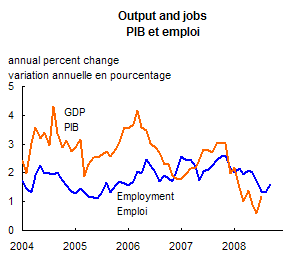
Summary table - key indicators Overview* Output in July and employment in September posted large gains, after little or no growth in previous months. The abrupt nature of the gains in output and employment after several months of weakness suggests that some of the slack earlier in the year was rooted in a shortfall of supply and not a deficiency of demand. These increases are in marked contrast with a noticeable deterioration in the US economy in August and September amid a significant intensification of the turmoil in US financial markets. The leading indicators over the summer pointed to this widening gap between growth in Canada and a slump in the US. The unsmoothed index for the US fell 0.5% in August after a 0.7% drop in July. In Canada, the index posted small gains over the summer. The stock market provides a revealing insight into the difference between Canada and the US. South of the border, the value of financial institutions plunged as several large firms went bankrupt or were absorbed by the government or other firms. Financial stocks have been the weakest sector of US stock markets so far in 2008. Conversely, in Canada the financial sector has seen below-average losses to date in 2008.
There were other measures that Canada’s economy had diverged significantly from the US, at least in the short-run. Most notable is employment, which fell for a ninth straight month in the US in September, while it grew 1.1% in Canada over the same period. Auto sales in September were stable in Canada, while they returned to their lows for the year in the US. Labour marketsEmployment rose by 0.6% (or 107,000) in September, its largest monthly advance since May 2006 (when an increase of 94,000 was followed by a drop of only 8,000 the following month). The increase followed a large loss of jobs in July and only a partial recovery in August, and left employment down 0.1% between the second and the third quarters. Some of the upturn in employment originated in a 0.6% expansion of the labour force, which met the pent-up demand of employers for more workers. Alberta was the best example, where the labour force grew by 25,000. Nearly half of this increase originated in youths, matching their gains in other provinces. Most of the increase in employment was in part-time positions, especially for youths. Despite the rise in part-time positions, total hours worked rose by 1.2%, boosted by sharply higher hours worked in agriculture. Agricultural employment rose by 4.7%, the most of any industry. This followed a drop the month before, when heavy rain interfered with field operations. But a sharp improvement in weather in September was reflected in a much better than expected harvest: between late August and the end of September, wheat farmers raised their crop estimate from 27% to 36% growth due to favourable weather conditions. Most (10,000 out of 15,000) of the expansion in agricultural jobs occurred on the prairie provinces. The prairies also led the job growth in other resource industries, after declines earlier in the year despite strong demand for commodities.
Other goods-producing industries continued to expand employment. Construction added another 14,000 workers, bringing their year-over-year growth to 10.4%, easily the most of any industry. The recovery of manufacturing jobs continued for the fourth month in the last five. Services employment rose by 0.5%. Health care contributed the bulk of this gain after a drop in August. Transportation benefited from the growing need to ship natural resources and manufactured goods. Business services recovered from a sharp decline over the summer, but remained 5% below their level at the turn of the year. While the prairie provinces posted the fastest employment gains, thanks to their resource base, Ontario and Quebec also saw sizeable gains. Ontario’s growth originated in health care and the recovery in manufacturing. Quebec’s increase was driven by further gains in construction and manufacturing as well as health care and business services. BC posted the only significant drop in jobs, mostly due to further losses in trade. Leading IndicatorsThe composite leading index rose by 0.2% in August after no change in July. Overall, 5 of the 10 components expanded, while 2 were unchanged and 3 declined. Household demand continued to be the most consistent source of growth in recent months. Sales of furniture and appliances grew steadily, helped by a steady housing market. Housing starts rebounded in August, while existing home sales have stabilized over the summer after retreating late in 2007 and early into 2008. Meanwhile, personal services have become the main prop to growth in services employment. Sales of other durable goods were an exception to the strength in household spending, reflecting slower auto sales over the summer in response to record gasoline prices. Manufacturing continued to recover from a weak start to the year. New orders expanded for the third time in four months, led by aerospace and capital goods, notably iron and steel where orders have nearly doubled in the past year. The average workweek increased for the first time since April 2007. This firming in demand for labour was reflected in factory employment, which rose in August for the third time in four months. OutputReal GDP jumped 0.7% in July, its largest monthly advance since September 2003 (following the electricity blackout in Ontario in August). Nearly half the increase originated in energy, after its output had fallen for five straight months. The end of prolonged maintenance for offshore operations and in the oilsands was reinforced by a rebound in drilling and exploration. Meanwhile, manufacturing output continued to recover from its first-quarter slump. Its 1.3% gain in July was the third in four months, leaving factory output 2% below its level last October. Primary metals continued to be the fastest growing industry, led by iron and steel. Capital goods industries also posted further gains, notably machinery, aerospace and non-metallic minerals. Autos were an exception to growth, as assemblies slowed over the summer due to weak US sales. With mining and manufacturing expanding rapidly, goods-handling industries benefited from higher demand. Wholesalers led this increase. Gains in rail and truck transport were partly offset by a third straight drop for air transport, which is the mode of transport most affected by higher fuel costs. Other services posted small increases. For business services this marked only a partial rebound from losses in the previous two months. Consumer spending ranged from flat for retailers to losses for gambling, accommodation and food. Household demandRetail sales volume in July was little changed for the third straight month. Sales of durable goods remain hamstrung by weak auto sales, while higher prices dampened consumption of food and energy. Durable goods remained split between lower demand for autos and strong gains elsewhere. The slump in auto sales that began in June continued into August as gasoline prices mounted. Spending on other durable goods rose 1.4%, their fourth straight advance. Furniture and appliances led the increase. Existing home sales fell in August, after little change in the previous two months. The drop was largely confined to cities on the east and west coasts. Meanwhile, housing starts rebounded 13% in August to recover all of their drop in July. Most of this see-saw movement originated in the volatile multiple units component. Starts of single-family units posted a small gain after trending down since last November. Merchandise tradeCanada’s exports continued to rise for a seventh consecutive month, up 2.2% in July. Unlike most of the increases this year, July was driven more by volume than prices. Energy exports posted their first decline since last October, mostly for electricity as utilities in the US needed less over the summer. Energy exports remain 76% above a year earlier. Instead of energy, export growth was driven by machinery and equipment and industrial goods. Drilling equipment and aircraft led the former, metals and fertilizer the latter. Exports of most other goods went against their recent trend. Forestry products rose, after hovering around $2.1 billion in the first half of the year. Autos edged up, but remained 17% below July 2007 and more assembly plants temporarily closed in August. Agricultural exports dipped for a second straight month, notably for wheat as grain supplies fell awaiting the fall harvest.
Imports rose 4.6%, with volumes also playing the dominant role. All sectors expanded, led by autos after strong domestic sales in the first half of the year. Industrial goods posted a ninth straight increase, reflecting higher demand from the energy sector for pipes and tubes (for pipelines) and underwater cables (for power lines). Stronger business investment also was reflected in a 2.9% gain in imports of machinery and equipment, which in volume returned to May’s record high. PricesConsumer prices rose 0.2% between July and August after a 0.3% hike the month before. These represent an easing from increases averaging 0.7% in the previous three months. Most of the slowdown in inflation originated in food and energy, a reflection that the sharp upward pressure on commodity prices in the first half of the year was easing. Energy prices fell 3%, their first monthly decline since October 2007. Most of the drop was due to gasoline prices. The rate of increase for food prices also slowed, after grain prices moderated (bread prices fell outright for the first time in a year) while vegetable prices fell as the local harvest began. Prices for most products excluding food and energy rose modestly over the summer, leaving the annual rate of increase steady at 1.2%. The cost of goods was little changed, as an upturn for durable goods was offset by discounts for clothing. Most of the upward pressure on services came from shelter and air fares.
Commodity prices in September dropped for the second straight month, hitting their lowest level since January. Food and energy prices both fell about 10%. Food retreated as a bumper grain harvest for wheat and canola was being completed. Crude oil prices dipped below $100 a barrel for the first time in six months. Industrial goods were pulled down by declines for metals, especially nickel. Prices for manufactured goods fell in August for the first time since last October. The drop was largely confined to petroleum and metals. Prices rose for a majority of goods, notably exports such as autos and forestry products which received a boost from a lower exchange rate. Financial marketsThe Toronto stock market tumbled nearly 15% in September amid the global turmoil in financial markets. While almost all components fell, the largest declines were in metals and energy, which each lost over a quarter of their value. Financials were the only major component to escape the carnage in September. Short-term interest rates for corporations rose half a percentage point in the second half of September, reflecting the turbulence in global financial markets. The yield on government securities fell. For consumers, short-term mortgage rates fell slightly, while 5-year rates edged up. Financial flows in July and August were unimpaired by the growing turmoil in US markets. Household credit growth picked up slightly to 0.8% in July. Short-term business credit rose 1.1% in August, its largest increase of the year. Corporations did shift from issuing equity to bonds over the summer, with the former drying up in August. Regional economiesOntario’s economy moved to the forefront over the summer, led by housing and manufacturing. Manufacturing sales jumped 4.7% in July: after gains in May and June, shipments in Ontario have recouped all of December’s 8% tumble. Primary metals led the recent gains, rising by one-third since April as iron and steel output strengthened. Capital goods industries also continued to expand. Some of this growth may reflect the surge in housing starts. Starts rose 81% in August to their highest level since July 2005, reinforcing their upward trend so far this year. In particular, there has been a spate of condo projects in Toronto. Retail sales edged up 0.1% in July, continuing their deceleration so far in 2008. Quebec also saw a third straight hike in manufacturing shipments. July’s 2% gain was led by primary metals, after aircraft and petroleum had fuelled growth in the previous two months. Retail sales remained the strongest in Canada, as a 0.7% in July was the fourth straight increase. Housing starts dipped below 40,000 units in August for the first time this year. Household demand in western Canada continued to weaken, after strong gains in 2007. The slowdown was most pronounced in housing. Starts on the prairies fell 23%, their third loss in a row, leaving them at half their average in 2007. In Alberta, both new and existing home prices have fallen this year, after unsustainable increases in 2007. Housing starts decreased 8% in BC, extending their slow downward trend this year. Retail sales also fell about 0.7% in both the prairies and BC, after a slow first half of the year. Manufacturing shipments in BC remained the weakest in Canada, reflecting more losses for wood. The prairies remained buoyed by its petroleum sector. International economiesIn the United States, economic conditions deteriorated sharply in August and September, even before the full brunt of the worsening credit crisis was felt. Industrial production, housing and retail sales all dropped sharply in August, while the first data from sources ranging from factory purchasing managers to chain store and auto sales to credit flows all points to a marked steepening of the slump in September. This already was evident in another decline in payrolls in September, their ninth straight drop. Detailed data on job flows in August showed the source of the weakness was shifting from less hiring to more layoffs. Industrial production fell 1.1% in August. The drop was led by a 16% drop in auto assemblies, which throttled back to a 15-year low of 8.2 million units (at annual rates). Construction materials and business equipment also saw large declines. New orders point to continuing weakness. September output also will be compromised by a strike at Boeing and Hurricane Gustav, which knocked offline about half of oil and gas production off the US Gulf Coast. Households in the US continued to retrench. Housing starts fell 6% to their lowest level since 1990. Both starts and new home sales have fallen by one-third in the past year. Existing home sales retreated in August, putting renewed downward pressure on home prices. Retail sales dipped 0.3% in August after a decline in July, despite a rebound in auto sales which was reversed in September. Consumer credit in August fell outright for the first time this year. The trade sector remained one bright spot. Exports rose 3.3% in July after a similar gain in June, helped by higher prices for commodities like food and metals. However, export prices fell 1.7% in August. Meanwhile, imports into the US rose 3.9% in July, mostly due to higher oil prices, which fell sharply in August. Growth slowed in the euro-zone in July, as industrial production fell for the third straight month. Output was down in every major sector, led by a 5.7% drop for durable consumer goods. New orders rebounded slightly, although this was driven by the volatile transport equipment sector. Imports (notably energy) outstripped export growth, resulting in a trade deficit for July. Retail spending remained weak as consumers faced tightened credit, rising unemployment and higher interest rates. Inflation eased slightly to an annual rate of 3.8% in August. German industrial production contracted 1.8% in July, while new orders posted their sixth straight decline. A strong euro and slowing global growth dampened demand, while rising input and borrowing costs squeezed profit margins. Real retail sales rebounded in August after a weak summer, boosted by a fall in crude oil prices. Both inflation and the jobless rates eased in August. Industrial production in France rebounded in July, after slipping the previous two months. New orders rose for the second consecutive month, snapping its recent see-saw pattern. With both domestic and external demand lacklustre, business confidence continued its downward slide in September, and consumers remained unwilling to open their wallets, despite some easing in prices in August. British industrial production fell for the third straight month in July, as export demand continued to wane. Despite the continuing slump in housing and rising unemployment, consumers resumed spending in August as retailers began offering widespread discounts. Japan continued to be squeezed by weak external demand. The merchandise trade balance fell into deficit in August, as exports to the US tumbled 22%, particularly autos. Exports to Europe also fell, while shipments to China and other Asian countries slowed sharply. Imports rose, driven by high oil prices. Consumer confidence remained weak, dampened by high gas and food prices and stagnating wages. Squeezed by rising costs and weak demand, profits narrowed, leading to cutbacks in capital spending. Chinese business investment picked up in August, despite restrictions on construction adopted for the Olympics. Retail sales were strong as the inflation rate fell to a 14-month low of 4.9% in August, its fourth consecutive monthly drop due to moderating food prices. In response, after five years of tightening monetary policy, the Bank of China cut interest rates and eased back lending restrictions in September. Economic growth was upbeat in Brazil in the second quarter. Real GDP rose 1.6% from the first quarter, boosted by domestic spending and exports. Rising wages and job creation fuelled demand, leading to a surge in spending on ‘big-ticket’ items such as housing and autos. Note* Based on data available on October 10; all data references are in current dollars unless otherwise stated. |

|
|