|
|
| |
Information identified as archived is provided for reference, research or recordkeeping purposes. It is not subject to the Government of Canada Web Standards and has not been altered or updated since it was archived. Please "contact us" to request a format other than those available.
 |
11-010-XIB |
|
Current economic conditions
Summary table - key indicators Overview* The economy grew at a steady pace in the fourth quarter, including a 0.4% burst in December in real GDP, its best month of the year. Output slightly exceeded employment growth in the last two months, after lagging in the previous two, although jobs accelerated early in the new year. There was little change in the sectoral composition of fourth-quarter growth. Business investment remained the fastest growing sector, notably engineering projects. Consumer spending rose steadily, while housing levelled off after falling slightly over the summer. Exports rallied in the second half of the year, after declines in the first half. The major change in the fourth quarter was an end to the large inventory build-up of the previous two quarters, reflecting both stronger sales and a slight decline in imports: excluding inventories, GDP posted its largest gain in over 3 years.
Firms intend to boost business investment by nearly 5% in 2007, after three straight increases averaging 9% (in each year, firms spent slightly more than they forecast). The buoyant outlook was evident in almost all industries, with only oil and gas and forestry projecting declines (3% each). The largest increases in investment were planned by electric and natural gas utilities, continuing last year’s rapid growth as the nation boosted generating capacity, especially wind-generated power. Transportation also plans more double-digit growth, much in infrastructure such as urban transit, airports and harbors. BC, host to the 2010 Olympics, led growth in arts and recreation. Manufacturers intend to invest more this year, reversing a drop in 2006. Primary metals, chemicals (including four new ethanol plants) and food led the increase, more than offsetting cutbacks by the auto industry. Metal mining also forecast gains, although the 8% increase only partly offsets a drop in 2006 and appears cautious in light of record prices and profits. The oil and gas sector posted the largest changes from 2006. Conventional oil and gas firms slashed 15% (or $5.2 billion) from investment budgets, mostly due to the impact of lower natural gas prices. Oil and gas drilling companies themselves plan to cut investment an additional 22% ($0.8 billion). Pipeline construction is also scheduled to fall slightly, after more than doubling in 2006. However, these cuts were largely offset by sharply higher investment in the oilsands, up 35% (or $4 billion) to $15.5 billion. Investment in the oilsands accounts for one-third of all spending by the oil and gas sector in 2007, up from one-quarter just two years ago. Together with the gain in utilities, overall energy investment is projected to rise to nearly $70 billion, double its level in 2002. However, its 4% increase in 2007 follows four straight double-digit gains.
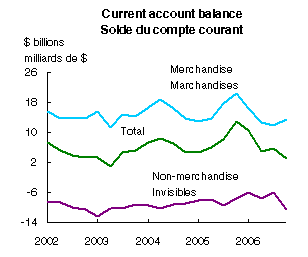
Labour marketsEmployment growth slowed to 0.1% in February, after surging a total 0.8% over the previous two months. Most of the increase was among youths. With the labour force little changed in the month, the unemployment rate returned to its record low of 6.1%.Unemployment hit record lows on both coasts, although for different reasons. In the Atlantic region, small job gains and a shrinking labour force pushed the unemployment rate down to 8.9%, after rising above 10% in January for the first time in eight months. New Brunswick led the way, with unemployment dipping below 7% for the first time ever, mostly because its labour force shrank 2.4% in the past year. BC also set a record low with a 4.0% unemployment rate, although this was driven by impressive job growth of 3.5% over the past year. Alberta continued to post the largest employment gains, powered again by its resource and construction industries. An influx of youths into the labour force kept unemployment from falling. There was little overall change in central Canada, where increases in services (notably finance) offset more losses in manufacturing. Leading indicatorsThe growth of the composite leading index returned to 0.5% in January, after a brief slowdown to 0.2% in December. Most of the acceleration originated in housing, where balmy weather early in the new year gave a boost to housing starts. Financial market conditions remained buoyant, while most other components posted slow, steady growth. The housing index swung from a 0.5% decline in December to a 2.8% increase in January. All of the turnaround originated in housing starts, where the stimulus of mild weather did not last past the second week of January. Durable goods sales posted 0.4% growth, probably a better representation of the underlying trend of consumer spending. Personal incomes were buoyed by steady job growth early in the new year. The stock market also bolstered household wealth, hitting a new high in January. Growth shifted from metals and energy to sectors more dependent on domestic demand. The money supply expanded steadily (since M1 is no longer available, we are now projecting growth using M1+). The leading indicator for the United States rose 0.1%, after a downward-revised 0.1% drop the month before. The gradual improvement in the outlook for our largest export market was reflected in an upturn in new orders from manufactured goods. Still, manufacturers struggled to keep inventories aligned with shipments, and continued to trim the workweek of employees. OutputMonthly GDP grew 0.4% in December, after an upwardly revised gain of 0.3% the month before. Services led both increases. While manufacturing rebounded, goods overall rose only 0.1% in both months, as the warm weather lowered demand for energy by over 3%.Almost all major service industries contributed to growth in December. Consumer spending led the way, reflecting solid gains for retailers, gambling and a wide range of travel-related services (such as air transport and food and accommodation). Goods-handling industries in wholesale and transportation also benefited from increased cross-border trade. By comparison, business services posted only modest growth, while government was restrained by cuts at the federal level. Manufacturing ended the year with solid back-to-back gains, offsetting its losses in September and October but still leaving output 2.8% below its most recent peak in December 2005. The turnaround was driven by sharp recovery in auto assemblies. Capital goods industries also posted solid gains, notably machinery and computers and electronics. The resource sector trimmed output across the board for a second straight month. Oil and gas led the drop, and drilling activity fell sharply for a fifth straight month amid concerns about another record warm winter like 2006 (seasonable cold returned in mid-January). Even non-energy resources slumped at year end. Metal mining retreated after two straight increases, while forestry and livestock production slowed. Household DemandHouseholders remained the largest contributor to growth in the fourth quarter. Labour income rose at an annual rate of 6% due to strong job growth, while prices of consumer goods and services was unchanged. Housing levelled off after back-to-back declines, reflecting a pick-up in the resale and renovation market.Retail sales volume jumped 2.3% in December, after two straight months of declining demand. Clothing led the increase with a 5% hike, reversing its losses in the previous two months. Some of the recent volatility may reflect unusual changes in the weather, an important driver of clothing purchases. Auto sales strengthened for a second straight month, capping a solid second half of the year after a weak first half. Spending on other durable goods remained robust. A resumption of price discounts boosted demand for computers and electronics. Furniture and appliance sales were buoyed by the strength of house sales at year end. Overall consumer spending growth was checked by lower energy needs due to unseasonably warm weather. Restaurants and taverns did a brisk business across the country, except Quebec where receipts fell 1% from a year ago after a ban on indoor smoking took effect. The drop was felt the most at full-service restaurants (-8%) and taverns (-11%), as caterers and fast food restaurants were unscathed. Housing started the year on a strong note. Housing starts jumped 19% in January to an annual rate of 250,000 units, their highest level in over two years. The record warmth at the start of the year clearly played a major role, as 85% of the increase was concentrated in multiple units, which are usually much more affected by adverse winter weather than single-family dwellings. Existing home sales rose 4% on the heels of a 5% advance in December. The increase was felt across the nation. Resale housing prices continued to rise at a double-digit annual rate. Merchandise tradeThe quarterly current account surplus was cut nearly in half to $3.0 billion. A widening of the deficits for investment income and services outweighed a small increase in the goods surplus. Almost all of the deterioration in investment income originated in profits, reflecting higher profits earned by foreign-owned companies in Canada (notably in mining) and lower profits by Canadian companies abroad. The increase in the services deficit reflected increased travel abroad by Canadians.
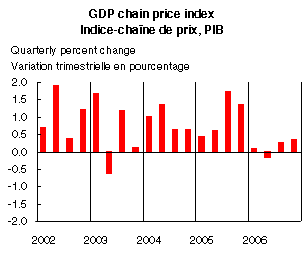
Both exports and imports ended the year on a strong note, each up nearly 4% in December, driven by a revival of the auto sector. For imports, this was a third straight increase. Exports added smartly to their upwardly revised gain in November, recovering almost all of their losses earlier in the year to stand just shy of their record set in December 2005. The monthly trade surplus rose to $5 billion, the highest in ten months. Cars led the increase in auto exports, reflecting the launch of new models after some delays in introducing new models. Exports of other manufactured goods were mixed, as a sharp recovery for consumer goods accompanied flat demand for machinery and equipment. Natural resource exports rose across the board. Industrial goods posted an eighth consecutive increase, buoyed by record-setting shipments of aluminum, zinc and nickel. Energy exports continued to rebound from sharp losses in the autumn, as prices firmed. Food and forestry exports both rose about 4%. For forestry, this was the first increase in six months, largely due to the tentative upturn in US home-building. Auto imports were boosted by both higher vehicle sales and more parts needed by assembly lines. Other consumer goods posted a fifth straight increase. Business demand for machinery and equipment surpassed $10 billion for the first time since the ICT boom peaked in 2000. December’s increase was fuelled by demand from the oilpatch. PricesThe year-over-year increase in the price of goods and services produced in Canada slowed from a peak of 4.1% late in 2005 to just 0.5% at the end of 2006. Most of the slowdown originated in export prices, which swung from a 7% increase to a 3% decline in the past four quarters. Prices paid by consumers decelerated sharply, mostly due to falling energy costs. While import prices remained little changed, the cost of both residential and non-residential construction was boosted by shortages in Alberta.
Consumer prices were unchanged between December and January, slowing year-over-year inflation to 1.2%. Energy prices fell 1.6%, mostly reflecting the lower cost of filling up at the pump. Outside of energy, clothing gave a small boost to prices, as discounting by retailers during Christmas ended. The upward pressure on housing costs in Alberta began to subside, with new home prices in Calgary down slightly. The increases were partly offset by further price cuts for recreation equipment. Commodity prices continued to strengthen, recovering to their highs set early in December. Most of the turnaround originated in energy, where a prolonged cold snap across North America buttressed demand for oil and gas. Metals prices also recovered. Copper bounced back from a 10-month low to about where it started the year, aluminum hit its highest level since May, while nickel was up 20% since the start of the year to set new records. Financial marketsThere was a substantial increase in net capital inflows into Canada in the fourth quarter. For a second straight quarter, there were large foreign acquisitions of Canadian companies, especially in the lucrative mining sector. A sharp sell-off at month end left the stock market unchanged in February and up little so far this year. The drop was again led by energy as well as consumer stocks. Real estate, metals and high-tech remained in favour. Interest rates were also little changed, while the exchange rate recovered all the ground lost in January. Corporate demand for funds moderated in January, after a sharp increase in the fourth quarter. The latter was surprisingly strong in view of the record corporate financial surplus. Net savings by firms hit an annual rate of $82 billion. While corporate profits were up less than 1%, investment income was strong and lumber firms received large rebates owed by the US government on tariffs levied in recent years. As well, corporations spent much less on inventories in the fourth quarter. International economiesGrowth stalled in the United States to start the new year, with weak auto and housing demand contributing to a setback in industrial production. This followed a substantial downward revision of fourth-quarter GDP growth to 0.5%, mostly due to lower inventories. Retail sales were flat in January. Auto sales decelerated anew, as manufacturers continued to wean consumers from rebates. The burst of demand for electronic goods in November and December could not be sustained into the new year. The belated arrival of winter gave a boost to clothing demand. The tentative upturn of housing late in 2006 did not carry over into January. Housing starts tumbled 14%. The effect of the unseasonably warm start to the month was unclear. Starts rose in the northeast, which was the warmest region, but plunged 29% in the west, where building permits fell only 2%, suggesting the underlying trend of demand remained firm. New home sales tumbled 17% in January, mostly in the West. Still, consumer confidence hit a 5-year high, buoyed by a continued strong labour market. Industrial production dropped 0.5% in January, reversing all of its gain in December. Most of the drop originated in manufacturing (utility demand rebounded due to the cold snap in the second half of the month). Over half of the decrease was due to motor vehicles. Renewed cutbacks in autos were aggravated by steep declines for heavy trucks (which had boosted output in 2006 to meet higher demand before new emission standards took effect this year). The slump in housing also reduced output of construction supplies by 1%. The prospect for a pick-up in investment spending was dulled by a sharp drop in orders for capital goods in January. Output was strong in the euro-zone in the final quarter of 2006, with real GDP posting 0.9% growth, almost double its pace in the third quarter. Industrial production was strong in December, boosted by energy and a recovery in intermediate goods. New orders followed suit, more than doubling their November advance, with demand up in every sector. External trade remained brisk, although 2006 ended in a deficit as steady surpluses in chemicals, machinery and vehicles could not offset the ballooning shortfall in energy. Consumers continued to spend freely throughout the year, pushing the retail volume up 1.4%. Unemployment eased further in January to 7.4%, down nearly a point from January 2006. Similarly, inflation also trended down to an annual rate of 1.8% in January 2007 from 2.4% a year earlier. The French economy grew 0.6% in the fourth quarter after being flat in the third. Industry rebounded in December, recouping all of its losses in the previous three months. New orders, however, fell after solid gains since September. Consumer spending picked up at year end and posted its fastest gain in almost seven years in January when steep discounting boosted demand for clothing and appliances. Business confidence strengthened as inflation eased to an annual rate of 1.4% in January and the unemployment rate fell to 8.4%.
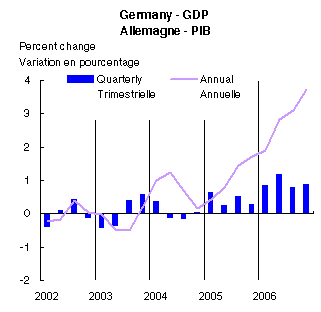
Real GDP in Germany grew 0.4% in the final quarter of 2006, slightly above its third-quarter pace, as exports posted their biggest quarterly rise in six years. The external trade surplus in the year to November remained Europe’s largest. Industrial production fell in December after a strong rebound the month before, while new orders also declined after consecutive gains. Consumers hit the stores in December, boosting the volume of retail sales 2.4% in the month before a three percent rise in the VAT took effect. The sales tax hike spurred inflation in the new year, with the annual rate rising to 1.8% from 1.4% in December. The unemployment rate continued its decline, falling to 7.7% in January. Britain’s economy grew at its fastest pace in over two years in the final quarter of the year. Real GDP rose 0.8%, driven by a rebound in household spending. Industrial production slowed in December as continued strength in the pound further dampened export demand. Inflation remained above the euro-zone average at year end, prompting a rise in interest rates early in 2007. Real GDP grew 1.2% in Japan in the fourth quarter, buoyed by consumer spending and business investment. Exports picked up, particularly to China, where they soared 51% in January due to strong demand for integrated circuits and autos. Still, industrial production fell 1.5%, its largest decline in three years. Retail sales also slowed in January. Although prices remain weak, the Bank of Japan raised interest rates in February from their near-zero level. Note* Based on data available on March 9; all data references are in current dollars unless otherwise stated. |

|
|